


Author Archives: sansmachining
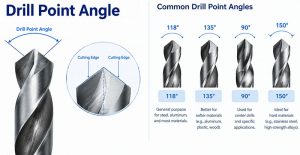
What Is Drill Point Angle? How Does It Affect CNC Drilling?
Understanding drill point angle can therefore help manufacturers select the right drill geometry and improve [...]
Oct
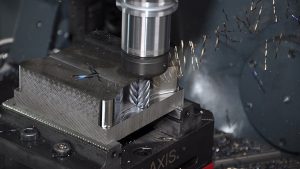
Why Do CNC Stainless Steel Parts Need Passivation Treatment?
For many CNC stainless steel parts that require corrosion resistance, cleanliness, and long-term stability, passivation [...]
Sep
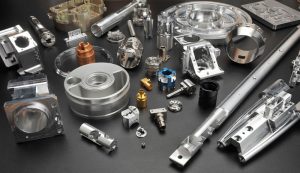
Why Manufacturers Choose Custom CNC parts instead of standard parts?
Custom CNC machining is often not just a replacement for standard parts, but an engineering [...]
Sep
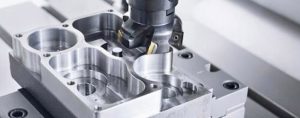
CNC Custom Parts Machining: What Information The Supplier Actually Needs
Preparing a complete and clear set of technical documentation before starting custom CNC part machining [...]
Sep
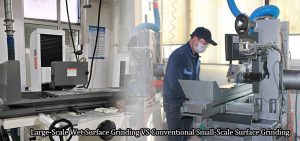
Large-Scale Wet Surface Grinding VS Conventional Small-Scale Surface Grinding
This article explains the key differences between large-scale wet surface grinding and conventional small-scale surface [...]
Sep
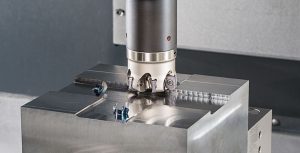
The Importance of Tool Calibration: Ensuring CNC Machining Accuracy and Production Stability
In CNC precision machining, tool calibration is a crucial step in ensuring machining accuracy, dimensional [...]
Sep

What is Contour Milling? Definition, Machining Process, and Applications
Contour milling is a common and important machining method in CNC milling. It is primarily [...]
Sep

CNC Pocket Milling: Process, Types, Tools, and Applications
Unlike simple surface milling, pocket milling requires controlled material removal from a defined internal area [...]
Sep
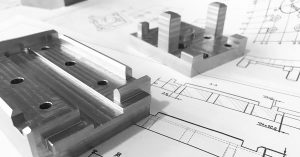
Fixture Plates vs Tooling Plates vs Modular Fixtures: A Complete Guide to CNC Workholding Solutions
Understanding the differences between these CNC workholding solutions allows manufacturers to select the most suitable [...]
Sep
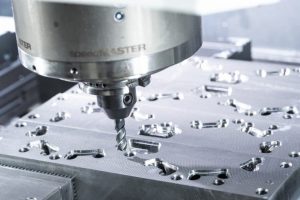
From Prototype to Low-Volume Manufacturing: A Complete Guide to Preparing Custom Parts for Small-Batch Production
Explains how manufacturers can efficiently prepare custom CNC machined parts for low-volume production while maintaining [...]
Sep
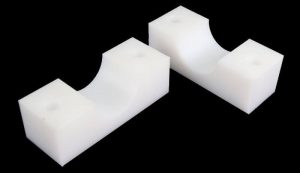
High-Density Polyethylene (HDPE): Properties, Advantages, and CNC Machining Tips
Key properties and advantages of HDPE, along with practical CNC machining tips for producing high-quality [...]
Aug
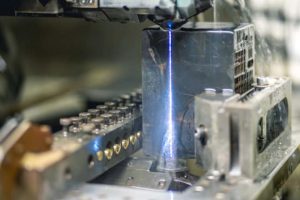
Machining Hardened Tool Steel: Why Wire EDM Is the Precision Standard
This article explains why Wire EDM has become the preferred manufacturing process for hardened tool [...]
Aug

Micromachining Services for Prototyping and Precision Manufacturing
Micromachining combines advanced CNC technology, specialized cutting tools, and highly controlled machining processes to produce [...]
Aug
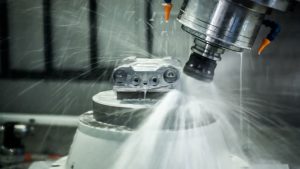
Carburizing, Carbonitriding, Nitriding & Nitrocarburizing in CNC Machining Industry
Among the various surface hardening technologies available today, carburizing, carbonitriding, nitriding, and nitrocarburizing are the [...]
Aug
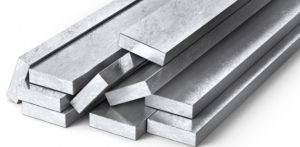
Carbon Steel CNC Machining: Strategies to Reduce Costs, Optimize Heat Treatment, and Improve Surface Finish
This article explains how manufacturers can optimize every stage of carbon steel CNC machining to [...]
Aug
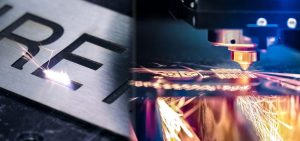
Laser Marking vs. Laser Engraving: Key Differences, Processes, and Applications
Understanding the characteristics of laser marking and laser engraving helps manufacturers select the most appropriate [...]
Aug
CNC Machining Lead Times Explained: How OEMs Can Accelerate Production
CNC machining is known for its flexibility and precision, lead times can vary significantly depending [...]
Aug

Brass CNC Machining: Proven Strategies to Reduce Costs, Improve Thread Quality, and Achieve Superior Surface Finish
This article discusses practical methods for controlling machining costs, producing reliable threads, and achieving superior [...]
Aug