


CNC pocket milling is one of the most widely used machining operations in precision manufacturing. It is commonly applied to create recessed areas, cavities, slots, and pockets with specific depths and geometries in metal and plastic components. From aerospace structural parts and automotive components to industrial machinery and custom prototypes, pocket milling plays an essential role in producing complex CNC machined parts.
Unlike simple surface milling, pocket milling requires controlled material removal from a defined internal area while maintaining accurate dimensions, surface quality, and tool stability. As component designs become more complex and lightweight structures become increasingly important, efficient pocket milling strategies have become a key capability for modern CNC machining manufacturers.
This article explains the CNC pocket milling process, common types, cutting tools, machining considerations, and major applications.
What Is CNC Pocket Milling?
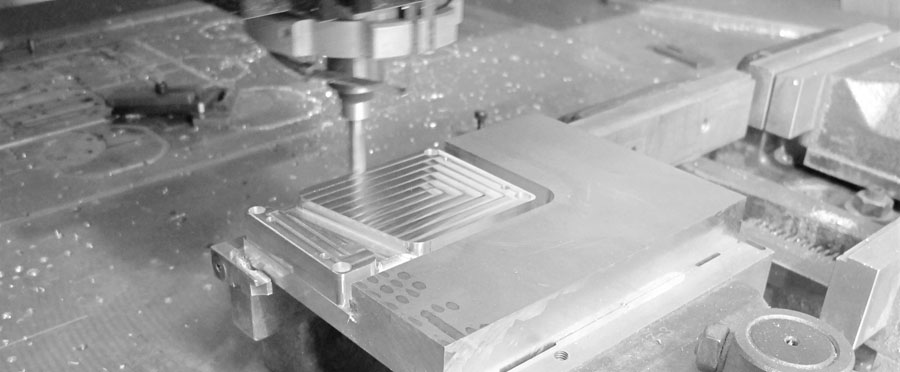
CNC pocket milling is a machining process that uses computer-controlled milling machines to remove material from a workpiece and create a recessed cavity or pocket. The cutting tool moves along programmed tool paths to remove material inside a predefined boundary while leaving the surrounding material unchanged.
A pocket can have different shapes, depths, and profiles depending on the design requirements. Common pocket geometries include rectangular pockets, circular pockets, irregular-shaped cavities, and complex 3D contours.
During the process, a CNC machine controls multiple parameters, including tool movement, cutting speed, feed rate, depth of cut, and machining sequence. This allows manufacturers to achieve high precision and repeatability even when producing complex parts.
Pocket milling is commonly performed on CNC milling machines, machining centers, and multi-axis CNC systems. Depending on the part geometry, manufacturers may use three-axis, four-axis, or five-axis machining to improve accessibility and reduce setups.
How Does CNC Pocket Milling Work?
The CNC pocket milling process usually begins with CAD model preparation and CAM programming. Engineers first define the pocket geometry, dimensions, tolerances, and surface requirements in the digital model. The CAM software then generates optimized tool paths based on the selected machining strategy.
After programming, the workpiece is securely mounted on the CNC machine using appropriate workholding methods. The selected cutting tool removes material through a series of controlled passes until the desired pocket depth and shape are achieved.
A typical pocket milling operation includes rough machining and finishing machining.
During rough machining, the main goal is rapid material removal. Larger cutting tools and more aggressive cutting parameters are usually used to remove the majority of excess material efficiently.
During finishing machining, smaller tools and optimized cutting conditions are applied to achieve final dimensions, tighter tolerances, and improved surface finish.
For complex pockets, additional operations such as corner finishing, deburring, and surface treatment may be required after machining.
Types of CNC Pocket Milling
CNC pocket milling can be classified into several types depending on pocket geometry, machining method, and application requirements.
Open Pocket Milling
Open pocket milling involves machining a cavity that has one or more open sides connected to the outside edge of the workpiece. Because the cutting tool has easier access to the machining area, this method is generally faster and simpler compared with closed pockets.
Open pockets are commonly found in brackets, frames, structural components, and machine housings where weight reduction is required.
Closed Pocket Milling
Closed pocket milling creates fully enclosed cavities surrounded by material on all sides. This type of machining requires more precise tool path planning because the cutting tool must enter and remove material within a confined area.
Closed pockets are commonly used in precision mechanical parts, molds, fixtures, and housings where internal cavities or mounting areas are required.
Through Pocket Milling
Through pockets extend completely through the thickness of the workpiece. They are similar to machining holes but typically involve larger or more complex shapes.
Through pockets are often used in lightweight structures, mounting plates, frames, and aerospace components where unnecessary material needs to be removed.
Blind Pocket Milling
Blind pockets have a defined bottom surface and do not pass completely through the workpiece. These pockets require accurate depth control because the bottom surface often serves a functional purpose.
Blind pockets are widely used for mounting features, sealing surfaces, electronic housings, and mechanical assemblies.
3D Pocket Milling
3D pocket milling involves machining complex curved cavities or irregular surfaces that cannot be produced using simple two-dimensional tool paths.
This method is commonly used for molds, aerospace components, medical parts, and products with complex geometries. Multi-axis CNC machining is often required to maintain proper tool orientation and improve surface quality.
CNC Pocket Milling Cutting Tools
Selecting the correct cutting tool is critical for achieving efficient material removal, long tool life, and high-quality surfaces.
End Mills
End mills are the most commonly used tools for CNC pocket milling. They are available in various designs, including flat end mills, ball nose end mills, and corner radius end mills.
Flat end mills are commonly used for roughing and machining flat-bottom pockets. Ball nose end mills are preferred for curved surfaces and three-dimensional features, while corner radius end mills help improve tool strength and surface finish.
Carbide Cutting Tools
Carbide tools are widely used in CNC pocket milling because they provide excellent hardness, wear resistance, and high-temperature performance.
Compared with traditional high-speed steel tools, carbide cutters allow higher cutting speeds and improved productivity, especially when machining harder materials such as stainless steel, titanium, and tool steels.
High-Efficiency Milling Tools
Modern CNC manufacturers increasingly use specialized high-efficiency milling tools designed for faster material removal and improved tool life.
These tools often feature optimized flute designs, variable helix angles, and advanced coatings that reduce vibration and improve machining stability.
Important CNC Pocket Milling Parameters
Achieving high-quality pocket milling results requires proper control of machining parameters.
Cutting Speed and Feed Rate
Cutting speed determines how fast the cutting edge moves through the material, while feed rate controls how quickly the tool advances through the workpiece.
Incorrect parameter selection can lead to problems such as excessive tool wear, poor surface finish, overheating, or tool breakage.
Depth of Cut
Depth of cut affects both machining efficiency and cutting forces. Larger depths remove material faster but increase stress on the tool and machine.
For rough machining, deeper cuts may be used, while finishing operations typically require smaller depths to achieve better accuracy and surface quality.
Step-Down and Step-Over
Step-down refers to the vertical distance between machining passes, while step-over refers to the horizontal distance between tool paths.
Optimizing these values helps balance machining speed, tool load, and surface finish requirements.
Common Challenges in CNC Pocket Milling
Although CNC pocket milling is a highly reliable machining method, several challenges can affect part quality.
Tool Deflection and Vibration
Deep pockets often require long cutting tools, which can increase tool deflection and vibration. These issues may result in inaccurate dimensions, poor surface finish, and reduced tool life.
Using shorter tools whenever possible, optimizing cutting parameters, and improving workholding stability can help minimize vibration.
Chip Removal Problems
During pocket milling, chips can accumulate inside the cavity and interfere with cutting performance. Poor chip evacuation may cause overheating, surface damage, and tool failure.
Proper coolant application, optimized tool paths, and suitable cutting tools help improve chip removal efficiency.
Corner Radius Limitations
Because milling tools are cylindrical, internal corners naturally have a radius. Sharp internal corners cannot usually be produced directly through standard milling operations.
Designers should consider tool diameter and required corner radius during the design stage to avoid unnecessary machining difficulties.
Applications of CNC Pocket Milling
CNC pocket milling is used across many industries because of its ability to create precise internal features and reduce component weight.
Aerospace Industry
Aerospace components often require lightweight structures with high strength. Pocket milling is widely used to remove unnecessary material from aircraft brackets, frames, housings, and structural components while maintaining mechanical performance.
Automotive Manufacturing
In the automotive sector, pocket milling is commonly used for engine components, transmission parts, fixtures, molds, and custom performance components.
The process allows manufacturers to create precise mounting areas, weight-reduction pockets, and complex internal features.
Medical Device Manufacturing
Medical components require high precision and excellent surface quality. CNC pocket milling is used to produce surgical instruments, implant components, equipment housings, and medical device parts.
Industrial Equipment
Industrial machinery relies heavily on pocket milling for manufacturing brackets, mounting plates, machine housings, and custom mechanical components.
The flexibility of CNC machining makes it suitable for both prototype development and small-batch production.
Design Guidelines for CNC Pocket Milling
Good part design can significantly improve machining efficiency and reduce manufacturing costs.
Designers should avoid unnecessarily deep pockets because they require longer tools and increase the risk of vibration. Maintaining reasonable pocket depth-to-width ratios helps improve machining stability.
Internal corner radii should also be considered during the design stage. Larger corner radii allow the use of stronger cutting tools and reduce machining time.
Pocket dimensions, tolerances, and surface requirements should be clearly specified to ensure manufacturers can select appropriate machining strategies.
Advantages of CNC Pocket Milling
CNC pocket milling provides several important benefits for precision manufacturing.
It allows manufacturers to create complex internal features with high accuracy and repeatability. Compared with manual machining methods, CNC pocket milling offers better consistency, faster production cycles, and easier replication of identical parts.
The process is also highly flexible, supporting a wide range of materials including aluminum, stainless steel, titanium, copper, engineering plastics, and composite materials.
For prototype manufacturing and low-volume production, CNC pocket milling provides an efficient solution without requiring expensive dedicated tooling.
Conclusion
CNC pocket milling is a fundamental machining process used to create precise cavities, recesses, and internal features across a wide range of industries. By combining advanced CNC programming, optimized cutting tools, and proper machining strategies, manufacturers can achieve excellent accuracy, surface quality, and production efficiency.
Understanding the different types of pocket milling, selecting suitable cutting tools, and applying proper machining parameters are essential for producing reliable CNC components.
Whether used for aerospace structures, automotive parts, medical devices, or custom industrial components, CNC pocket milling remains a valuable manufacturing technology that enables engineers to create lightweight, complex, and high-performance parts with precision and consistency.