

The excellent corrosion resistance of stainless steel in humid environments and various corrosive media is closely related to the passivation film formed on its surface. Under normal circumstances, chromium in stainless steel reacts with oxygen in the air to form a very thin, chromium-rich oxide film on the metal surface. This film prevents the substrate from further reacting with the external environment, thus providing protection.
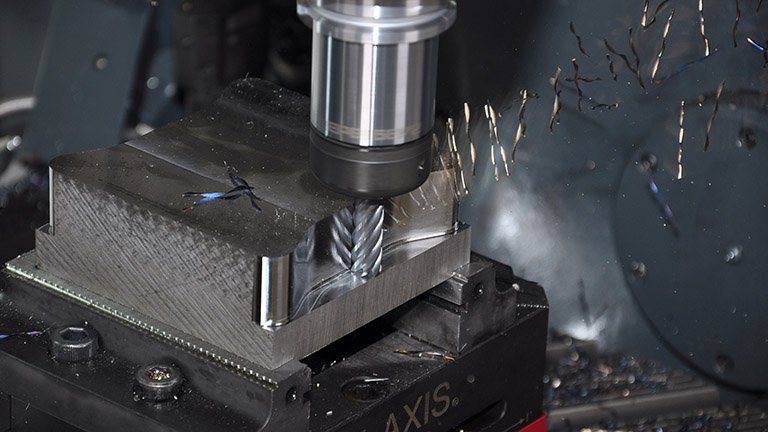
However, for stainless steel parts machined by CNC turning, milling, drilling, grinding, and other machining processes, the originally stable surface condition can be affected. Tools, abrasives, cutting fluids, and the machining environment can all leave contaminants on the surface of the parts, especially free iron. Although stainless steel itself is corrosion-resistant, these surface contaminants can become the starting point for localized corrosion.
Therefore, for many CNC stainless steel parts that require corrosion resistance, cleanliness, and long-term stability, passivation treatment after machining is an important post-processing step.
What Is Stainless Steel Passivation?
Stainless steel passivation is a chemical surface treatment process that primarily involves treating the surface of processed stainless steel with a specific acidic solution. This removes free iron, iron contaminants, and other impurities that affect corrosion resistance, while simultaneously promoting the formation of a more stable passivated surface.
It differs from surface treatments such as painting and electroplating. The focus of passivation is on cleaning and chemically conditioning the stainless steel surface, allowing the protective oxide film formed by the material itself to function more stably.
After stainless steel passivation, the basic dimensions and mechanical properties of the parts typically do not change significantly, making it ideal for CNC precision machining.
What Problems Does Passivation Mainly Solve?
Passivation treatment of CNC stainless steel parts primarily addresses two issues.
First, it removes surface contaminants.
The passivation process removes residual free iron and some metallic contaminants from the machining process, resulting in a cleaner stainless steel surface.
Second, it promotes the formation of a stable passivation film.
After cleaning and chemical treatment, a stable chromium-rich protective film can reform on the stainless steel surface, thereby restoring and improving its corrosion resistance.
Therefore, from a processing technology perspective, passivation is not simply “rust prevention,” but rather a further chemical treatment of the machined stainless steel surface.
General Process For Stainless Steel Passivation
The specific processes used may vary depending on the supplier and the grade of stainless steel, but the passivation of CNC stainless steel parts generally involves several basic steps.
Cleaning and Degreasing
After CNC machining, the parts first need to have cutting oil, coolant, grease, and other organic contaminants removed from their surface.
If significant oil contamination is present on the surface, subsequent pickling or passivation solutions cannot evenly contact the metal surface, affecting the final treatment effect.
Therefore, pretreatment is a crucial step in the passivation process.
Surface Contaminant Removal
After cleaning, pickling or other chemical pretreatments are performed, depending on the specific condition of the parts, to remove surface oxides, free iron, and other metallic contaminants.
This step is particularly important for stainless steel parts that have been contaminated with iron during machining.
Passivation Treatment
The pretreated parts proceed to the passivation process.
Common stainless steel passivation systems include nitric acid passivation and citric acid passivation.
The passivation solution reacts chemically with the stainless steel surface, further removing contaminants and promoting the formation of a stable passivated surface.
The specific solution concentration, temperature, and treatment time need to be determined based on the material grade, part condition, and relevant standards.
Rinsing and Drying
After passivation, the parts need to be thoroughly rinsed to remove any residual chemical treatment solution from the surface.
Followed by drying, residual moisture and chemicals should be avoided to prevent secondary contamination or corrosion of the parts.
For precision CNC parts, the cleanliness of the rinsing water and the drying environment are also important considerations.
What Is The Difference Between Stainless Steel Passivation And Electropolishing?
Passivation and electropolishing are often discussed together in relation to the surface treatment of stainless steel parts, but they are not the same process.
The primary goal of passivation is to improve the chemical state and corrosion resistance of the stainless steel surface.
Electropolishing, on the other hand, focuses more on improving surface morphology and can also enhance corrosion resistance.
Electropolishing removes microscopic protrusions from the stainless steel surface through electrochemical processes, resulting in a smoother surface. This reduces surface roughness and improves finish.
If the part only needs improved corrosion resistance while maintaining the dimensions and surface texture desired after CNC machining, passivation is usually sufficient.
If the part also requires a very smooth surface, low roughness, or higher cleanliness, electropolishing can be considered.
Conclusion
While stainless steel possesses excellent corrosion resistance, this does not mean that CNC-machined parts will never rust.
Machining processes such as turning, milling, drilling, and grinding can alter the surface condition of stainless steel and potentially introduce free iron and other contaminants. When these contaminants are exposed to humid or corrosive environments, they can become the starting point for localized rust.
The core function of stainless steel passivation is to remove free iron and contaminants from the surface through chemical treatment and help the stainless steel reform a stable passivated protective state.
For CNC stainless steel parts with high requirements for corrosion resistance, dimensional stability, and surface cleanliness, passivation is a very practical post-processing technique.
When choosing a passivation process, it should not be simply understood as “passivation will prevent rusting.” The final corrosion resistance also depends on the stainless steel grade, machining condition, surface cleanliness, passivation process, operating environment, and subsequent storage and maintenance conditions.
For precision CNC manufacturing, truly effective stainless steel rust prevention does not rely on a single process, but rather on establishing a complete and stable manufacturing process from material selection and machining to surface treatment and final packaging.