

In mechanical manufacturing, standard parts have always been an important option for reducing procurement costs and simplifying assembly. Screws, washers, bushings, connectors, and various standard mechanical components all have mature specifications and supply channels. For products with simple structures and conventional performance requirements, directly purchasing standard parts is often the most economical solution.
However, as product designs become increasingly complex, manufacturers often encounter a problem: while standard parts are available, they may not be truly suitable for their products.
In this situation, custom CNC machined parts can provide a more flexible solution. Manufacturers can design parts specifically for their applications, including dimensions, structure, materials, tolerances, and surface finishes, rather than modifying the product design to fit existing standard parts.
What are Custom CNC Parts?
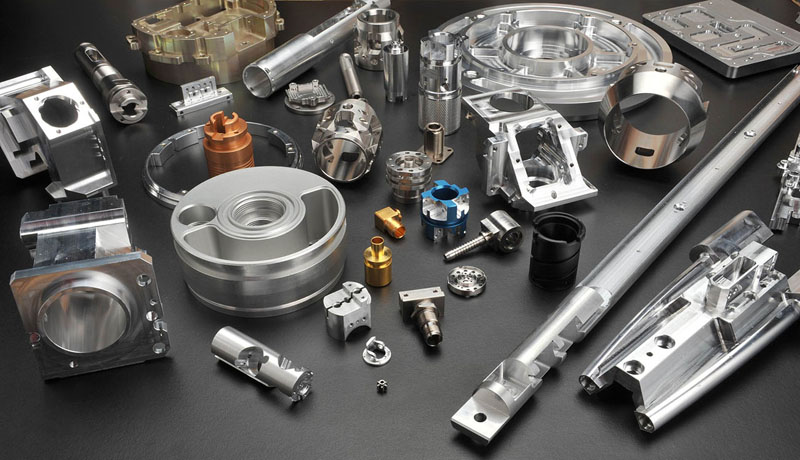
Custom CNC parts are non-standard components manufactured based on customer-provided CAD models, engineering drawings, and technical requirements, using processes such as CNC milling, CNC turning, drilling, tapping, boring, and multi-axis machining.
Unlike standard parts in a catalog, custom parts are not selected from existing specifications as the “closest” product, but rather manufactured from scratch according to a specific application.
After CNC customization, the inner diameter, outer diameter, length, chamfers, slots, and fit tolerances can be determined simultaneously according to actual assembly requirements, allowing the part to be directly installed into the target equipment.
Modern CNC machining equipment can also handle complex curved surfaces, precision holes, deep cavities, threads, irregular grooves, and multi-angle features; therefore, the design freedom of custom parts is far greater than that of traditional standard parts.
Custom CNC parts offer superior dimensional control.
For many mechanical products, even minute deviations in part dimensions can affect final performance.
Improper fit between shafts and bearings can lead to loosening, abnormal vibration, or excessive friction. Inadequate dimensional control of sealing surfaces can cause leaks. Misalignment in the positions of multiple mounting holes can also cause assembly difficulties.
CNC precision machining ensures the consistent production of parts according to the dimensions and tolerances specified in engineering drawings. Validated machining programs can be reused in subsequent production, maintaining high consistency between batches. The original text also emphasizes the advantages of CNC machining in terms of accuracy and repeatability, which is particularly important for mechanical products requiring stable assembly and long-term operation.
Of course, part precision is not simply a matter of “the smaller the tolerance, the better.” The truly sensible approach is to determine critical dimensions and tolerance requirements based on the part’s function. Focusing on controlling dimensions that affect assembly, movement, sealing, and positioning can meet performance requirements while avoiding unnecessary machining costs.
Custom machining can help integrate multiple parts.
In traditional designs, a single function may require multiple parts to achieve. For example, a mounting structure might consist of brackets, pads, positioning elements, and connectors. While these parts can be sourced from standard components, positioning, adjustment, and fastening are required during assembly.
By redesigning through CNC machining, the functions of multiple parts can sometimes be integrated into a single, monolithic component.
This reduces the number of parts, thereby decreasing assembly time and inventory management pressure.
Fewer parts also mean fewer connection interfaces and potential points of failure. For automated equipment, industrial machinery, and precision instruments requiring long-term operation, this design optimization can lead to significant reliability improvements.
Therefore, custom CNC machining is not merely about “making a non-standard part according to drawings”, it can also be part of product structure optimization.
Greater Freedom in Material Selection
Standard parts typically offer only a limited selection of materials and specifications, while custom CNC machining allows for the selection of more suitable materials based on the part’s actual working environment.
Common materials include aluminum alloys, stainless steel, carbon steel, brass, bronze, copper, titanium alloys, tool steel, and various engineering plastics.
Different materials offer different performance characteristics.
For example, aluminum alloys have low density and good machinability, making them suitable for weight-sensitive structural components and equipment parts; stainless steel has excellent corrosion resistance, making it suitable for humid, chemical environments, and some medical and food equipment; titanium alloys have a high strength-to-weight ratio, making them suitable for aerospace and other high-performance applications. Engineering plastics can be used in applications requiring insulation, wear resistance, low friction, or weight reduction.
Custom CNC machining is particularly suitable for prototyping and small-batch production.
For new product development, standard parts may not meet the requirements for prototype verification.
The R&D phase often requires the rapid manufacture of several or even dozens of parts for assembly testing, functional verification, and structural optimization.
Small-batch production may not be economical if manufacturing methods requiring dedicated molds or significant upfront tooling investment are used.
CNC machining, on the other hand, allows for direct production based on CAD models and engineering drawings, eliminating the need for high mold costs for a small number of parts. Therefore, it is ideal for prototyping, small-batch production, and product trial manufacturing. The original text also lists rapid prototyping and low- to medium-batch production as key advantages of custom CNC machining.
Engineers can machine a batch of actual parts for testing, modify the design based on the test results, and then proceed to the next round of machining.
This approach shortens the product development cycle, exposes design problems earlier, and avoids large-scale production before the design has been verified.
Custom CNC parts don’t necessarily mean higher costs.
If only comparing the purchase price of a single part, standard parts usually have a clear advantage. However, manufacturing costs cannot be judged solely by the unit price of the part itself.
If a standard part cannot be directly installed, additional adapters, shims, or machining steps may be required, if the standard part material does not meet requirements, additional processing may be necessary, if assembly requires manual adjustments, the final labor costs must also be calculated.
For prototyping, small-batch, and low-to-medium-batch production, custom CNC machining may be more economical because it typically does not require expensive dedicated molds.
As the number of parts increases, unit machining costs can be reduced by optimizing toolpaths, improving clamping methods, using automated production, and reducing manual operations.
Therefore, the choice between standard parts and custom CNC parts should be based on the entire product lifecycle cost, not just comparing the purchase price.
Which industries are suitable for custom CNC machining?
Due to its high material adaptability, dimensional control capabilities, and design flexibility, custom CNC machining has been widely used in many manufacturing fields.
In the aerospace industry, custom-machined parts are typically used for structural and functional components with high requirements for weight, strength, and dimensional accuracy.
In the medical device field, precision CNC parts are used for surgical instruments, equipment structural components, and other components requiring strict dimensional control.
The automotive manufacturing, industrial automation, robotics, hydraulic systems, pneumatic equipment, electronic equipment, semiconductor equipment, agricultural machinery, and heavy equipment industries also use a large number of non-standard precision parts.
Although these industries produce different products, their requirements for parts often share common characteristics: dimensional accuracy, stable performance, and long-term reliable operation.
How to Choose the Right CNC Custom Machining Supplier?
The quality of custom parts depends not only on the CNC equipment itself, but also on the supplier’s engineering capabilities and quality management level.
An experienced CNC machining supplier typically not only manufactures according to drawings, but also provides Design for Manufacturing (DFM) advice at the beginning of the project. This helps clients determine the reasonableness of tolerances, the suitability of materials, the ease of machining the structure, and find ways to reduce manufacturing costs.
Furthermore, it’s important to consider whether the supplier possesses stable inspection capabilities, surface treatment coordination abilities, and experience in mass production.
For long-term projects, the supplier’s ability to maintain consistent delivery times and batch consistency is equally crucial.
Working directly with an experienced manufacturer can reduce information loss between design, quotation, production, and quality inspection, and facilitate faster communication and adjustments when design changes occur. The original text also specifically emphasizes the value of manufacturer involvement in product development and providing DFM advice.
Conclusion
Standard parts can meet a large number of routine mechanical manufacturing needs, but as products enter the stages of precision, complexity, and specialization, simply relying on off-the-shelf parts from catalogs often results in limitations in size, materials, structure, and performance.
Through custom CNC machining, manufacturers can achieve more precise dimensional control, greater design freedom, and more flexible choices of materials and surface treatments. They can also reduce assembly steps through parts integration and shorten product development cycles during prototyping and small-batch production.
Therefore, for manufacturing companies with high requirements for precision, reliability, structural optimization, and product performance, custom CNC machining is often not just a replacement for standard parts, but an engineering solution that helps optimize the entire product design and manufacturing process.