


In machining manufacturing, achieving precise hole dimensions and smooth surface finishes is essential for producing high-quality components. While drilling operations create holes quickly, drilled holes often lack the dimensional accuracy and surface quality required for precision applications. This is where reamers become important.
A reamer is a rotary cutting tool used to slightly enlarge and finish pre-drilled holes with high accuracy. Reaming improves hole diameter consistency, roundness, surface finish, and overall dimensional precision. Reamers are widely used in industries such as aerospace, automotive, medical equipment, mold manufacturing, and precision engineering.
Different machining applications require different types of reamers depending on material, hole design, tolerance requirements, and production methods. Understanding the common types of reamers helps manufacturers choose the right tool for improving machining quality and efficiency.
What Is a Reamer?
A reamer is a multi-edge cutting tool designed to remove a small amount of material from the inside of a previously drilled or bored hole. Unlike drills, reamers are not intended to create holes from solid material. Instead, they refine existing holes to achieve tighter tolerances and smoother finishes.
Reaming operations are typically performed after drilling to ensure better dimensional accuracy and improved hole quality.
Depending on the application, reamers are available in various geometries, materials, and cutting configurations.
1. Hand Reamers
Hand reamers are designed for manual reaming operations. They usually feature a long taper at the cutting end, which helps guide the tool smoothly into the hole during hand operation.
These reamers commonly include a square shank so they can be turned using a tap wrench or hand tool.
Hand reamers are often used for:
- Repair work
- Maintenance applications
- Low-volume production
- Manual fitting operations
Although they are not suitable for high-speed production, hand reamers provide excellent control for precision adjustments and finishing operations.
2. Machine Reamers
Machine reamers are specifically designed for powered machining operations such as CNC machining centers, lathes, and drill presses.
Compared with hand reamers, machine reamers typically have a shorter lead taper and are optimized for higher cutting speeds and improved production efficiency.
Machine reamers are widely used in:
- CNC machining manufacturing
- Automotive component production
- Aerospace precision machining
- Industrial mass production
These reamers provide consistent hole sizing and high repeatability, making them essential in modern precision manufacturing.
3. Straight Flute Reamers
Straight flute reamers are one of the most commonly used reamer types. They feature straight cutting edges running parallel to the tool axis.
These reamers are particularly suitable for:
- General-purpose machining
- Through holes
- Soft materials
- Interrupted cuts
Straight flute reamers are simple, cost-effective, and provide good dimensional accuracy in many standard machining applications.
However, chip evacuation may become more difficult when machining deep holes or materials that produce long chips.
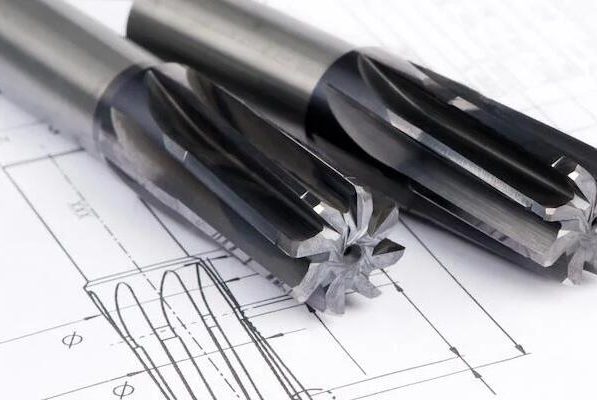
4. Spiral Flute Reamers
Spiral flute reamers feature helical cutting edges that improve chip evacuation during machining.
The spiral flute design helps reduce chatter and improves cutting smoothness, making these reamers especially useful for difficult machining conditions.
Advantages of spiral flute reamers include:
- Better chip removal
- Improved surface finish
- Reduced vibration
- Smoother cutting action
Spiral flute reamers are commonly used for blind holes and materials that generate continuous chips, such as aluminum and stainless steel.
The flute direction can vary depending on the application. Right-hand spirals are often used for blind holes, while left-hand spirals may be preferred for through holes.
5. Adjustable Reamers
Adjustable reamers allow users to modify the cutting diameter within a specific range. This flexibility makes them useful when exact hole sizes need fine adjustment.
The cutting blades can be expanded or contracted using adjustment mechanisms integrated into the tool body.
Adjustable reamers are commonly used in:
- Maintenance work
- Repair operations
- Tool rooms
- Low-volume precision applications
Although they may not provide the same rigidity as solid reamers, adjustable reamers offer versatility and reduce the need for multiple fixed-size tools.
6. Expansion Reamers
Expansion reamers are designed with a slightly expandable body that compensates for wear over time.
As the cutting edges wear down, the reamer diameter can be adjusted slightly to extend tool life and maintain dimensional accuracy.
Expansion reamers are especially useful in:
- Precision repair work
- Long-term tooling applications
- Cost-sensitive manufacturing environments
These reamers help manufacturers reduce tooling costs while maintaining consistent machining performance.
7. Shell Reamers
Shell reamers are large-diameter reamers designed with replaceable cutting bodies mounted onto separate arbors.
Because only the cutting shell needs replacement, shell reamers are more economical for large-hole machining applications.
Shell reamers are often used in:
- Heavy machinery manufacturing
- Aerospace components
- Large industrial equipment
- High-volume production systems
Their rigid construction provides excellent stability and accuracy for machining larger holes.
8. Carbide Reamers
Carbide reamers are manufactured using solid carbide or carbide-tipped cutting edges. They offer significantly higher hardness, wear resistance, and cutting performance compared with traditional high-speed steel reamers.
Carbide reamers are especially suitable for:
- High-speed CNC machining
- Hard materials
- Stainless steel machining
- Titanium alloys
- High-volume precision production
Advantages of carbide reamers include:
- Longer tool life
- Higher cutting speeds
- Improved dimensional consistency
- Better wear resistance
- Enhanced surface finish quality
Although carbide reamers are more expensive initially, their durability and productivity often provide lower overall machining costs in large-scale production environments.
Factors to Consider When Selecting a Reamer
Choosing the correct reamer depends on several important factors.
Material Type
Different workpiece materials require different cutting characteristics. Soft materials may work well with standard high-speed steel reamers, while harder alloys often require carbide tooling.
Hole Type
Blind holes, through holes, and interrupted holes may each require different flute designs for proper chip evacuation and cutting stability.
Tolerance Requirements
Applications requiring ultra-tight tolerances may benefit from precision-ground carbide reamers or specialized CNC reaming solutions.
Surface Finish Requirements
Higher-quality surface finishes often require optimized cutting geometries, proper coolant usage, and reduced vibration during machining.
Production Volume
High-volume manufacturing environments typically favor durable tooling solutions with longer tool life and faster cutting speeds.
Reaming in CNC Machining Manufacturing
In modern CNC machining, reaming remains an essential finishing operation for achieving precise hole quality.
Advanced CNC machines allow manufacturers to control:
- Feed rates
- Spindle speeds
- Coolant flow
- Tool alignment
- Cutting parameters
Combined with advanced tooling technologies, CNC reaming can achieve excellent hole tolerances, roundness, and surface finishes required for critical applications.
Industries such as aerospace, automotive, medical manufacturing, and semiconductor equipment production continue relying heavily on precision reaming operations.
Conclusion
Reamers play a critical role in machining manufacturing by improving hole accuracy, dimensional consistency, and surface quality. Different types of reamers are designed to meet various machining requirements, from manual repair work to high-speed CNC production.
The eight common types of reamers — hand reamers, machine reamers, straight flute reamers, spiral flute reamers, adjustable reamers, expansion reamers, shell reamers, and carbide reamers — each offer unique advantages depending on the application.
Selecting the right reamer helps manufacturers improve machining precision, extend tool life, reduce production costs, and achieve better overall manufacturing quality. As CNC machining technology continues advancing, reaming tools and processes will also continue evolving to meet the growing demands of modern precision manufacturing.