


Electroless nickel plating has become one of the most widely used surface finishing technologies in modern manufacturing. Known for its excellent corrosion resistance, uniform coating thickness, and high hardness, this process is widely applied in industries such as aerospace, automotive, electronics, medical equipment, oil and gas, and precision machining.
Compared with traditional electroplating methods, electroless nickel plating offers several unique advantages that make it highly suitable for complex components and high-performance applications. As manufacturing standards continue to increase, more companies are choosing electroless nickel plating to improve product durability, reliability, and surface performance.
What Is Electroless Nickel Plating?
Electroless nickel plating, also known as EN plating or autocatalytic nickel plating, is a chemical surface treatment process that deposits a nickel-phosphorus or nickel-boron alloy onto a substrate without using electrical current.
Unlike electroplating, which relies on electricity to deposit metal onto a surface, electroless nickel plating uses a controlled chemical reaction. Because the coating process does not depend on electrical conductivity distribution, the nickel layer can be deposited evenly across the entire surface, including deep holes, sharp edges, threads, and complex geometries.
This unique characteristic is one of the main reasons why electroless nickel plating is highly valued in precision manufacturing.
Excellent Corrosion Resistance
One of the biggest advantages of electroless nickel plating is its outstanding corrosion resistance. The nickel-phosphorus coating forms a dense and uniform barrier that protects the substrate from moisture, chemicals, oxidation, and harsh environmental conditions.
High-phosphorus electroless nickel coatings are particularly resistant to corrosion and are commonly used in:
- Marine environments
- Chemical processing equipment
- Oil and gas components
- Automotive parts exposed to moisture and salt
- Food processing machinery
Compared with many traditional coatings, electroless nickel plating provides longer-lasting protection, helping manufacturers extend product lifespan and reduce maintenance costs.
Uniform Coating Thickness
Traditional electroplating often creates uneven coating thickness due to variations in current density. Edges and corners may receive excessive buildup, while recessed areas may receive insufficient coverage.
Electroless nickel plating solves this problem by depositing material uniformly across all surfaces. This allows manufacturers to maintain precise dimensions and tight tolerances, even on highly complex parts.
Uniform thickness is especially important for:
- Precision CNC machined parts
- Valves and fittings
- Medical instruments
- Mold components
- Aerospace assemblies
The ability to coat internal passages, threads, and blind holes evenly is one of the key reasons electroless nickel plating is preferred for complex geometries.
High Surface Hardness and Wear Resistance
Electroless nickel coatings provide excellent hardness and wear resistance, especially after heat treatment.
Depending on phosphorus content and processing conditions, the hardness of electroless nickel plating can reach levels comparable to hard chrome coatings. This improves resistance to:
- Abrasion
- Friction
- Surface wear
- Mechanical damage
As a result, electroless nickel plating is widely used on components subjected to repeated movement or contact, such as gears, shafts, bearings, molds, and hydraulic parts.
Improved wear resistance helps reduce downtime and increases component service life in demanding industrial environments.
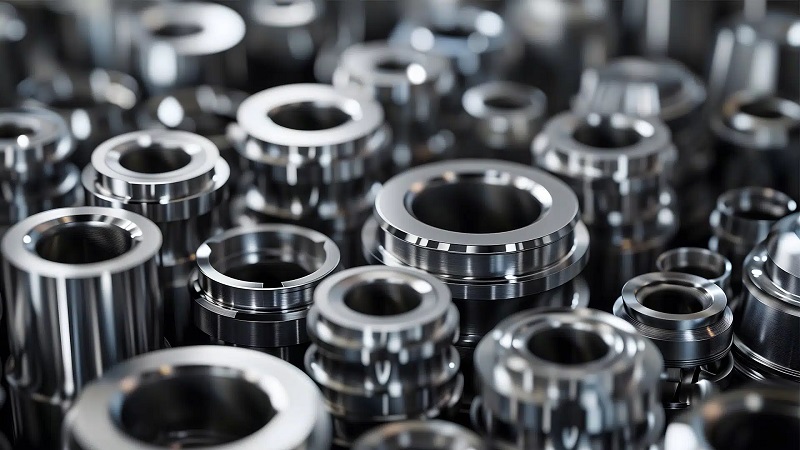
Improved Lubricity and Reduced Friction
Another important advantage of electroless nickel plating is its relatively low coefficient of friction. The smooth surface finish helps improve lubricity and reduce friction between moving parts.
This is beneficial in applications such as:
- Mechanical assemblies
- Hydraulic systems
- Injection molds
- Sliding components
- Automotive systems
Reduced friction not only improves performance but also minimizes wear and energy loss during operation.
Some specialized electroless nickel coatings can also incorporate particles such as PTFE (Teflon) to further enhance self-lubricating properties.
Excellent Adhesion to Various Materials
Electroless nickel plating can be applied to a wide range of substrates, including:
- Steel
- Stainless steel
- Aluminum
- Copper
- Brass
- Titanium
- Certain plastics
With proper surface preparation, the coating forms strong adhesion to the base material, ensuring long-term durability and coating stability.
This versatility makes electroless nickel plating suitable for diverse manufacturing industries and multi-material assemblies.
Enhanced Surface Appearance
In addition to functional benefits, electroless nickel plating also improves the appearance of components. The coating produces a smooth, bright, and uniform metallic finish that enhances product aesthetics.
Depending on the process and phosphorus content, the final appearance can range from matte to semi-bright finishes.
This makes electroless nickel plating useful not only for industrial applications but also for decorative and consumer products where appearance matters.
Better Dimensional Control
Because electroless nickel plating deposits material uniformly and predictably, manufacturers can achieve better dimensional accuracy compared with many other coating processes.
This is particularly important for precision components with tight tolerances, where uneven coatings could affect fit, sealing performance, or assembly accuracy.
The controlled deposition process also reduces the need for excessive post-processing or grinding.
Non-Magnetic Properties
High-phosphorus electroless nickel coatings can exhibit non-magnetic characteristics, making them suitable for electronics, aerospace, and specialized engineering applications where magnetic interference must be minimized.
This property is particularly useful for:
- Electronic components
- Aerospace sensors
- Medical devices
- Scientific instruments
- Environmentally Safer Alternative to Hard Chrome
In many industries, electroless nickel plating is increasingly replacing hard chrome plating due to environmental and regulatory concerns.
Traditional chrome plating involves hazardous hexavalent chromium, which is heavily regulated because of its environmental and health risks.
Electroless nickel plating offers a safer and more environmentally friendly alternative while still providing high hardness, corrosion resistance, and wear protection.
As sustainability becomes more important in manufacturing, the demand for electroless nickel plating continues to grow.
Design Considerations for Electroless Nickel Plating
When specifying electroless nickel plating, engineers should carefully evaluate factors such as part geometry, dimensional tolerances, and substrate compatibility. Proper planning during the design stage helps ensure coating performance, dimensional accuracy, and manufacturing efficiency.
Consider Coating Thickness
Because electroless nickel deposits uniformly over the entire component surface, coating thickness must be considered during part design. Critical dimensions should include suitable tolerance allowances to accommodate the added layer thickness. Extra attention should be given to threaded sections, precision fits, sealing surfaces, and mating components where excessive buildup could affect assembly or functionality.
For high-precision applications, the required plating thickness should be clearly defined in engineering drawings and technical specifications to maintain dimensional consistency.
Prepare Surface Finish Before Plating
The final appearance of the plated surface typically reflects the condition of the base material underneath. Surface imperfections such as machining marks, scratches, or rough textures may still remain visible after plating.
If a smooth decorative or high-quality cosmetic finish is required, polishing, grinding, or fine machining operations should be completed before the electroless nickel process begins.
Evaluate Heat Treatment Compatibility
Post-plating heat treatment is commonly used to increase coating hardness and improve wear resistance. However, elevated temperatures may influence the mechanical properties, dimensional stability, or structural integrity of the base material.
Designers should verify that the selected heat treatment process is compatible with both the substrate material and the component geometry, especially for thin-walled or precision-machined parts.
Plan for Masking and Selective Plating
Certain applications may require plating only on specific surfaces while leaving other areas uncoated. In these cases, masking techniques are used to protect critical regions from unwanted nickel buildup.
Considering masking requirements early in the design and manufacturing process can help minimize production complexity, reduce rework, and improve overall cost efficiency. Close communication between engineering and plating teams is highly recommended for components with selective plating requirements.
Future Trends in Electroless Nickel Plating
As manufacturing technologies continue to evolve, electroless nickel plating is also advancing. Several trends are shaping the future of the industry:
- Development of environmentally friendly plating chemicals
- Increased automation and process control
- Composite coatings with enhanced performance
- Improved nano-coating technologies
- Greater use in high-precision manufacturing industries
Manufacturers are increasingly seeking coatings that provide better durability, sustainability, and multifunctional performance, and electroless nickel plating is well positioned to meet these demands.
Conclusion
Electroless nickel plating offers a wide range of advantages, including excellent corrosion resistance, uniform coating thickness, high hardness, wear resistance, dimensional stability, and improved surface performance.
Its ability to coat complex geometries evenly makes it especially valuable in precision manufacturing and high-performance industrial applications. As industries continue demanding better reliability, longer service life, and environmentally friendly solutions, electroless nickel plating remains one of the most important and versatile surface finishing technologies in modern manufacturing.
For manufacturers looking to improve product durability, reduce maintenance costs, and enhance component performance, electroless nickel plating provides an efficient and highly effective solution.