


CNC turning is one of the most widely used machining processes in modern manufacturing, especially for producing cylindrical components with high accuracy and repeatability. From shafts and bushings to fasteners and precision connectors, CNC turning plays a vital role in industries that demand tight tolerances and consistent quality.
As manufacturing standards continue to rise, achieving high precision in CNC turning has become increasingly important. Modern applications in aerospace, automotive, medical devices, and industrial equipment often require dimensional tolerances within microns, along with excellent surface finish and long-term stability.
This article explores how CNC turning achieves tight tolerances, the key factors influencing precision, and the best practices used to maintain high-quality production.
What Is CNC Turning?
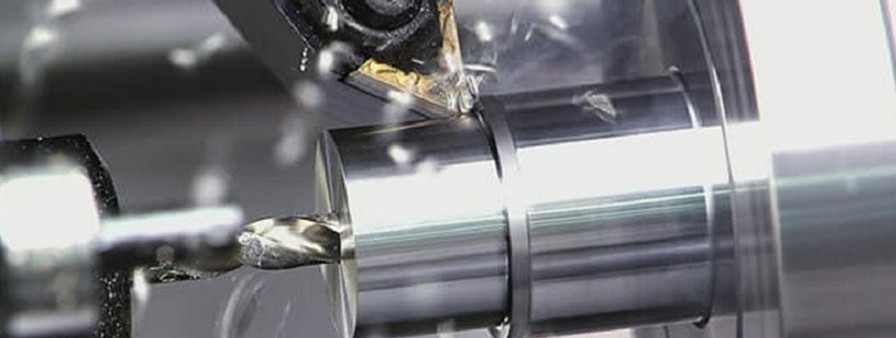
CNC turning is a subtractive machining process where a cutting tool removes material from a rotating workpiece. The process is typically performed on a CNC lathe, where the material is clamped in a chuck and rotated at high speed while a stationary cutting tool shapes it into the desired geometry.
Unlike manual lathes, CNC turning is controlled by computer programs that define tool paths, feed rates, spindle speeds, and cutting depth. This automation allows for extremely precise and repeatable machining results.
CNC turning is commonly used to produce:
- Cylindrical shafts
- Pins and bolts
- Bushings and spacers
- Threaded components
- Hydraulic and pneumatic parts
- Precision medical components
Why Tight Tolerances Matter in CNC Turning
Tight tolerances are essential in applications where parts must fit, function, and perform reliably under demanding conditions.
Even small dimensional variations can lead to issues such as misalignment, vibration, leakage, or premature wear. In industries like aerospace or medical manufacturing, such deviations are not acceptable and can directly affect safety and performance.
Precision CNC turning ensures that every component meets exact specifications, enabling proper assembly and long-term reliability in complex mechanical systems.
Key Factors That Affect CNC Turning Precision
Achieving tight tolerances in CNC turning depends on a combination of machine capability, tooling, material behavior, and process control.
One of the most important factors is machine rigidity. A stable CNC lathe with a strong structure minimizes vibration during cutting, which directly improves dimensional accuracy and surface finish.
Thermal stability is another critical factor. Heat generated during machining can cause both the machine and the workpiece to expand slightly, leading to dimensional variation. High-precision machines often include thermal compensation systems to reduce these effects.
Tool condition also plays a significant role. Worn or damaged cutting tools can introduce dimensional errors and poor surface quality. Maintaining sharp, high-quality tooling is essential for consistent results.
Material properties further influence machining accuracy. Metals such as stainless steel or titanium may behave differently under cutting forces compared to aluminum or brass, requiring adjusted machining parameters.
Tooling Selection for High-Precision Turning
Selecting the right tooling is essential for achieving tight tolerances in CNC turning operations.
Carbide cutting tools are commonly used due to their hardness, wear resistance, and ability to maintain sharp cutting edges over long production cycles. In high-precision applications, coated carbide tools may further improve performance by reducing friction and tool wear.
Tool geometry also affects precision. Positive rake angles, sharp cutting edges, and optimized chip breakers help reduce cutting forces and improve surface quality.
For ultra-precision applications, diamond tools or CBN (cubic boron nitride) tools may be used, especially when machining hardened materials or achieving mirror-like finishes.
Proper tool holder selection is equally important, as any imbalance or runout can negatively affect dimensional accuracy.
CNC Programming and Process Control
CNC programming plays a major role in achieving consistent turning precision.
Optimized tool paths help reduce unnecessary tool movement, minimize vibration, and ensure stable cutting conditions. Consistent feed rates and appropriate spindle speeds are essential for maintaining stable chip formation.
Advanced CNC systems often use adaptive control, which automatically adjusts cutting parameters based on real-time feedback. This helps maintain precision even when material conditions vary slightly.
Accurate tool offset settings are also critical. Even small errors in tool length or position can accumulate and affect final part dimensions.
Workholding and Setup Accuracy
Proper workholding is fundamental to achieving tight tolerances in CNC turning.
If a workpiece is not securely clamped or properly aligned, it may shift during machining, leading to dimensional errors or surface defects.
High-precision chucks, collets, and fixtures are commonly used to ensure stable and repeatable positioning. For long or slender parts, tailstocks or steady rests may be required to prevent deflection during machining.
Setup consistency is also important in mass production. Even minor variations in workholding setups can lead to differences between parts.
Surface Finish and Its Relationship to Precision
Surface finish is closely linked to dimensional accuracy in CNC turning.
A smoother surface generally indicates more stable cutting conditions and lower vibration levels. In many precision applications, surface roughness requirements are as important as dimensional tolerances.
Achieving excellent surface finish requires a balance of cutting speed, feed rate, and tool sharpness. Fine finishing passes with reduced feed rates are often used to achieve high-quality surfaces without compromising dimensional accuracy.
In some cases, secondary finishing operations such as polishing or grinding may be used to meet extremely strict surface requirements.
Material Considerations in Precision Turning
Different materials respond differently to CNC turning processes, which directly affects achievable tolerances.
Aluminum is generally easier to machine and allows for very tight tolerances due to its low cutting resistance and good thermal stability. Stainless steel, on the other hand, is more challenging due to its work hardening and heat generation characteristics.
Titanium and high-strength alloys require even more careful control of cutting parameters to avoid tool wear and dimensional variation.
Understanding material behavior is essential for selecting appropriate machining strategies and achieving consistent precision.
Quality Control in CNC Turning
Quality control is essential for maintaining tight tolerances in manufacturing.
Precision components are typically inspected using coordinate measuring machines (CMM), micrometers, optical comparators, and surface roughness testers. These tools ensure that parts meet design specifications before they move to assembly or shipment.
In high-volume production, statistical process control (SPC) is often used to monitor variation and detect trends before they lead to out-of-tolerance parts.
Consistent inspection processes help ensure that CNC turning operations remain stable and reliable over time.
Common Challenges in High-Precision Turning
Despite advanced technology, several challenges can affect CNC turning precision.
Tool wear is one of the most common issues, gradually reducing accuracy over time. Thermal expansion can also cause dimensional drift during long production runs.
Machine vibration, improper setup, and inconsistent material quality may further contribute to tolerance variation.
Addressing these challenges requires a combination of preventive maintenance, process optimization, and continuous monitoring.
Conclusion
CNC turning is a highly effective manufacturing process for producing precision cylindrical components with tight tolerances. Achieving high accuracy requires careful control of machine stability, tooling, programming, material selection, and quality inspection.
As manufacturing continues to evolve toward higher precision and automation, CNC turning remains a cornerstone technology for industries that demand reliability and consistency.
By optimizing every stage of the process—from setup and tooling to inspection and quality control—manufacturers can consistently achieve tight tolerances and deliver high-performance components for even the most demanding applications.