


Polyamide and nylon are among the most widely used engineering plastics in modern manufacturing. Both materials are valued for their excellent strength, durability, and resistance to wear, making them suitable for a wide range of industrial and consumer applications.
However, although these two terms are often used interchangeably, they are not exactly the same. Understanding their relationship and differences is essential for selecting the right material in CNC machining, product design, and engineering applications.
What Is Polyamide?
Polyamide refers to a broad category of polymers characterized by repeating amide bonds in their molecular structure. These materials can be either natural or synthetic, although industrial applications rely almost entirely on synthetic polyamides due to their consistent mechanical performance and chemical resistance.
Polyamides are known for their strong intermolecular bonding, which contributes to high tensile strength, excellent wear resistance, and good thermal stability. Depending on their structure, polyamides can be classified into aliphatic, semi-aromatic, and aromatic types, each offering different performance characteristics.
This diversity makes polyamide a highly versatile material family used in everything from industrial components to high-performance fibers.
What Is Nylon?
Nylon is a specific type of synthetic polyamide and represents one of the most commercially important engineering plastics. It is typically produced through controlled polymerization processes and is widely used due to its balanced combination of strength, flexibility, and processability.
Common types of nylon include Nylon 6 (PA6), Nylon 6/6 (PA66), and Nylon 12 (PA12), each offering different levels of strength, heat resistance, and moisture absorption.
One of nylon’s key advantages is its thermoplastic nature. It can be easily molded, extruded, or machined, making it highly suitable for CNC machining and mass production processes.
Key Similarities Between Polyamide and Nylon
Despite their differences in classification, polyamide and nylon share many core properties due to their similar chemical structure.
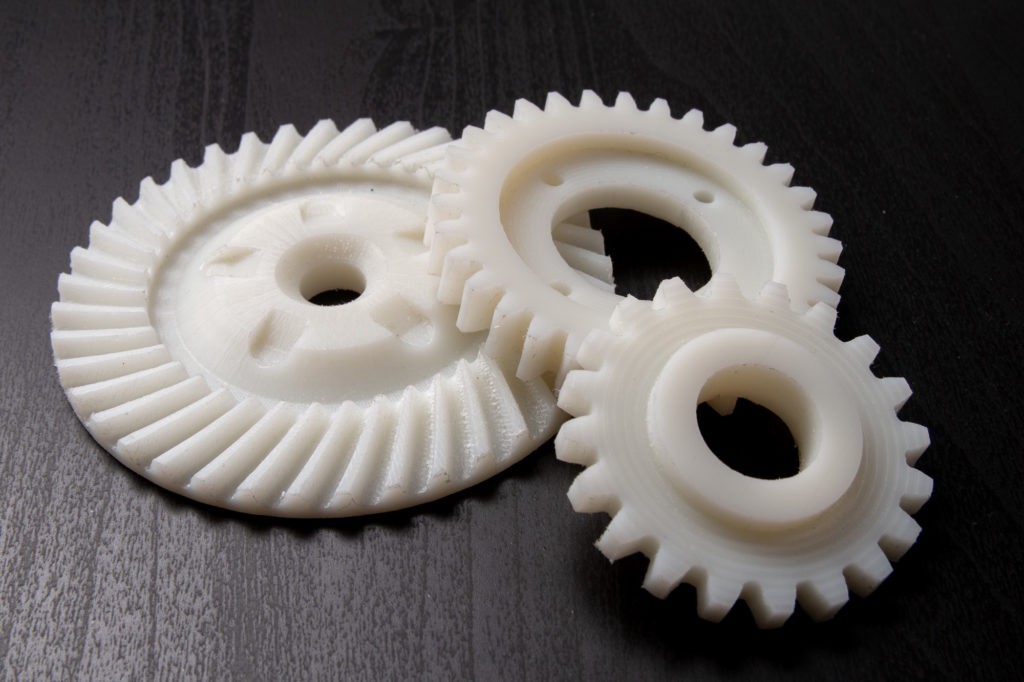
Both materials exhibit high tensile strength and can withstand repeated mechanical loads without significant deformation. Their excellent wear resistance makes them ideal for components such as gears, bushings, and sliding parts that experience continuous friction.
In addition, both materials offer good chemical resistance, particularly against oils, fuels, and common industrial solvents. This allows them to perform reliably in harsh environments.
Another shared characteristic is their thermal performance. While exact melting points vary depending on the specific formulation, both polyamide and nylon can operate under moderately high temperatures, supporting their use in demanding applications.
Key Differences Between Polyamide and Nylon
Although nylon belongs to the polyamide family, several important differences distinguish them in practical applications.
Scope and Classification
Polyamide is a broad term that includes a wide range of materials with varying properties, from natural fibers to high-performance engineering plastics. Nylon, on the other hand, is a specific subset within this category, primarily referring to aliphatic polyamides such as PA6 and PA66.
This means that while all nylon materials are polyamides, not all polyamides are nylon.
Mechanical Properties and Performance Range
Polyamides cover a much wider performance range. Some high-performance polyamides, particularly aromatic types, offer extremely high strength and thermal resistance, making them suitable for demanding industrial and aerospace applications.
Nylon, by comparison, provides a more balanced combination of strength, toughness, and flexibility. It is strong enough for most engineering applications while remaining easy to process and cost-effective.
This balance makes nylon one of the most commonly used engineering plastics in CNC machining.
Moisture Absorption and Dimensional Stability
Moisture absorption is one of the most critical differences between these materials. Both polyamide and nylon can absorb water, but the degree varies depending on the specific type.
Some specialized polyamides, such as PA11 and PA12, exhibit relatively low moisture absorption, which helps maintain dimensional stability. In contrast, standard nylon materials like PA6 can absorb significantly more moisture, potentially affecting precision in tight-tolerance applications.
This factor is particularly important in CNC machining, where even small dimensional changes can impact part accuracy.
Processing and Cost Considerations
From a manufacturing perspective, nylon is generally easier to process and more cost-effective than many high-performance polyamides. Its consistent properties and availability make it ideal for large-scale production and general engineering applications.
Some advanced polyamides, however, require more complex processing and come at a higher cost. These materials are typically used in applications where superior performance justifies the additional expense.
Applications of Polyamide Materials
Polyamides are widely used in industries that require strength, durability, and resistance to extreme conditions.
In automotive and transportation sectors, polyamide materials are used for engine components, housings, and structural parts due to their high strength-to-weight ratio.
In aerospace applications, high-performance polyamides provide reliable performance under mechanical stress and elevated temperatures. They are also used in protective equipment and industrial fabrics where heat resistance and durability are essential.
Additionally, polyamides are used in medical devices, packaging materials, and cable protection systems.
Applications of Nylon
Nylon is one of the most versatile engineering plastics and is widely used across multiple industries.
In mechanical engineering, nylon is commonly used for gears, bearings, and wear-resistant components due to its strength and self-lubricating properties. It is also used in automotive parts such as fuel system components and cooling system parts.
In consumer products, nylon is frequently found in textiles, kitchen tools, and everyday plastic items. Its durability and flexibility make it ideal for products that require long service life and repeated use.
In electrical and electronic applications, nylon is used for connectors, insulation components, and cable ties due to its good insulating properties and dimensional stability.
Choosing Between Polyamide and Nylon
Selecting the right material depends on the specific application requirements.
If the project requires a material with highly specialized properties—such as extreme heat resistance, superior strength, or low moisture absorption—advanced polyamides may be the better choice.
However, for most general engineering and CNC machining applications, nylon offers an excellent balance of performance, cost, and manufacturability. Its versatility makes it a practical solution for a wide range of industrial and consumer products.
Conclusion
Polyamide and nylon share a common chemical foundation, which gives them similar strength, wear resistance, and thermal performance. However, their differences in classification, mechanical range, moisture behavior, and processing characteristics play a critical role in material selection.
Understanding these differences allows engineers and manufacturers to make informed decisions based on performance requirements, production conditions, and cost considerations. Whether used in high-performance industrial components or everyday products, both materials continue to play a vital role in modern manufacturing.