
Steel is one of the most widely used materials in industrial manufacturing because of its strength, durability, wear resistance, and versatility. From load-bearing mechanical components to precision machine parts, steel components play an important role in equipment reliability and long-term operational performance. However, different applications require different material grades, dimensional tolerances, and machining processes.
Our CNC steel machining services help customers manufacture custom industrial and mechanical parts according to their engineering drawings and technical specifications. With CNC turning, CNC milling, drilling, tapping, and other precision machining operations, we can produce steel components in various shapes and sizes for prototypes, small batches, and production orders.
Whether you need simple machined components or complex parts with tight tolerances, choosing the right steel grade, machining strategy, and quality inspection process is essential to achieving consistent results.
What Is CNC Steel Machining?
CNC steel machining is a subtractive manufacturing process that uses computer-controlled machine tools to remove material from steel stock and produce components with specified dimensions and geometries.
Depending on the part design, CNC machining can involve turning, milling, drilling, boring, tapping, and other operations. These processes allow manufacturers to create features such as precision holes, threaded connections, mounting surfaces, slots, grooves, and complex contours.
Compared with manual machining, CNC technology provides repeatable tool movements, consistent machining parameters, and better control over dimensional accuracy. It is particularly suitable for custom components that require precise feature locations, controlled tolerances, and reliable consistency across multiple parts.
As a manufacturing solution, CNC steel machining supports a wide range of requirements, from straightforward mechanical components to parts with complex geometries and demanding engineering specifications.
Steel Materials for CNC Machined Parts
Selecting the appropriate steel grade is an important step in custom machining. Different steel materials offer different combinations of strength, hardness, machinability, corrosion resistance, and heat-treatment characteristics.
Carbon Steel
Carbon steel is widely used for general industrial and mechanical components because of its availability, versatility, and cost-effectiveness. Common applications include shafts, brackets, spacers, mounting components, and machine parts.
Low-carbon steels generally offer good machinability and weldability, making them suitable for many general-purpose applications. Medium-carbon steels can provide greater strength and hardness, particularly when an appropriate heat treatment is applied.
The specific grade should be selected according to the component’s load requirements, operating environment, and manufacturing needs.
Alloy Steel
Alloy steel contains additional alloying elements that modify its mechanical properties and heat-treatment response. Depending on the grade, it can provide improved strength, toughness, fatigue resistance, or wear resistance.
Alloy steels are commonly used for shafts, gears, mechanical transmission components, tooling-related parts, and other components exposed to demanding operating conditions.
Because some alloy steels have higher hardness or greater sensitivity to machining conditions, cutting tools, machining parameters, and heat-treatment requirements must be carefully considered.
Stainless Steel
Stainless steel is selected when corrosion resistance, durability, or specific mechanical properties are important. Common applications include industrial equipment components, fluid-handling parts, food-processing machinery, and mechanical assemblies exposed to moisture or certain chemicals.
Grades such as 304 and 316 stainless steel are widely used, while other grades may be selected for higher strength, hardness, or specialized performance requirements.
Stainless steel can present machining challenges due to work hardening, heat generation, and tool wear. Proper cutting conditions, suitable tooling, and effective chip control help maintain dimensional accuracy and surface quality.
Tool Steel and Hardened Steel
Tool steels are designed for applications requiring properties such as hardness, wear resistance, or strength under demanding conditions. Depending on the grade and heat treatment, these materials may be used for tooling components, wear-resistant parts, fixtures, and specialized mechanical components.
Machining hardened steel often requires specialized tooling and carefully controlled cutting parameters. In some cases, conventional machining is performed before heat treatment, followed by finish machining or grinding to achieve the required final dimensions.
The most suitable process depends on the material hardness, part geometry, tolerance requirements, and intended service conditions.
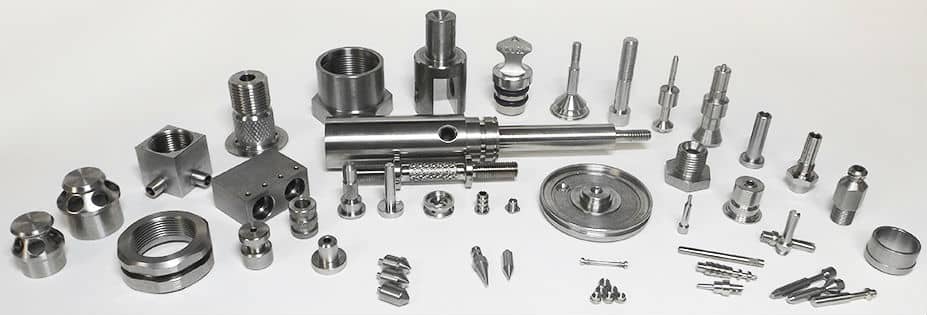
Our CNC Steel Machining Capabilities
Different part geometries require different machining strategies. By selecting suitable CNC processes, we can manufacture custom steel components while balancing dimensional accuracy, production efficiency, and cost.
CNC Milling
CNC milling is suitable for steel parts with flat surfaces, pockets, slots, contours, and complex three-dimensional features. It is commonly used to manufacture mounting plates, machine brackets, housings, fixtures, and structural components.
Multi-axis machining can help produce more complex geometries and reduce the number of setups required. For parts with multiple intersecting features, an appropriate machining strategy can improve positional accuracy and consistency.
CNC Turning
CNC turning is used primarily for components with cylindrical or rotational features. Typical examples include shafts, pins, bushings, threaded parts, and precision spacers.
Turning can produce controlled diameters, grooves, shoulders, tapers, and threaded features. For components requiring both rotational and milled features, turning and milling operations may be combined to reduce handling and improve feature alignment.
Drilling, Boring, and Threading
Steel components often require holes and threaded connections for fastening, positioning, fluid transfer, or assembly. CNC drilling and boring operations can produce holes according to specified dimensions, while tapping or thread milling can create internal threads.
For components with critical hole locations or tight positional tolerances, the machining sequence and workholding arrangement are important to maintaining accuracy.
Precision Finishing and Secondary Operations
Depending on the part requirements, additional processes may be needed after the primary machining operations. These can include deburring, grinding, heat treatment, and surface finishing.
Surface treatments such as black oxide, zinc plating, or other suitable coatings may also be considered when corrosion protection, appearance, or wear performance is required. The selected treatment should be compatible with the steel grade and intended application.
Where finishing or heat treatment may affect dimensions, the manufacturing plan should account for potential distortion, coating thickness, and final tolerance requirements.
Key Factors Affecting CNC Steel Machining Quality
Producing reliable steel components requires more than selecting a CNC machine. Material characteristics, tool selection, workholding, machining parameters, and inspection methods all influence the final result.
Material Selection and Machinability
Different steel grades respond differently to cutting forces, heat, and tool contact. A material with higher hardness or strength may require more robust tooling and lower cutting speeds than a more easily machinable grade.
Selecting a suitable grade helps ensure that the finished component meets its functional requirements without introducing unnecessary machining costs.
Dimensional Accuracy and Tolerances
The required tolerance range affects machining time, tooling choices, measurement methods, and production cost. Tight tolerances may require additional finishing operations, more stable workholding, or more frequent inspection.
Not every feature needs the same level of precision. Identifying critical dimensions on the engineering drawing helps establish a practical machining and inspection plan.
Surface Finish
Surface finish can affect friction, wear, sealing performance, fatigue behavior, and the appearance of a machined component.
Factors such as tool geometry, cutting conditions, material properties, and machining strategy influence the resulting surface quality. Where a specific surface roughness is required, the drawing should define the target value and the relevant measurement requirements.
Heat Treatment and Distortion Control
Heat treatment can improve the hardness, strength, or wear resistance of certain steel grades. However, it may also introduce dimensional changes or residual stresses.
For components requiring both high hardness and tight tolerances, the order of machining and heat treatment is especially important. Rough machining before heat treatment, followed by suitable finishing operations, may help achieve the required final dimensions.
Quality Inspection
Inspection verifies whether the finished parts meet the engineering drawing and agreed acceptance criteria. Depending on the component, quality checks may include dimensional measurement, thread inspection, surface roughness measurement, and visual inspection.
For parts with complex geometries or critical positional relationships, coordinate measuring machine (CMM) inspection may be appropriate. Inspection reports can be provided according to the project requirements to document measured dimensions and relevant quality results.
Applications of CNC Steel Machined Parts
Custom CNC steel components are used across many industries because steel offers a broad range of mechanical properties and manufacturing options.
Industrial machinery: Machine brackets, shafts, mounting blocks, fixtures, and replacement components.
Automotive and transportation: Mechanical housings, pins, spacers, transmission-related components, and custom hardware.
Automation equipment: Mounting plates, positioning components, linear-motion parts, and machine interfaces.
Oil and gas equipment: Selected mechanical components, connectors, and equipment parts designed for the specified service conditions.
Agricultural machinery: Durable mechanical components, brackets, shafts, and equipment repair parts.
General mechanical engineering: Custom components used in assemblies, production equipment, and specialized machinery
The appropriate steel grade and manufacturing process depend on factors such as load, operating temperature, exposure to corrosive substances, wear conditions, and required service life.
What Affects the Cost of CNC Steel Machining?
The cost of custom steel machining depends on several interconnected factors. Understanding these factors can help customers optimize their designs without compromising essential performance requirements.
Material grade and stock size: Different steel grades have different material costs and machining characteristics. Larger stock sizes and specialized grades may increase material expenses.
Part geometry and machining complexity: Deep pockets, thin walls, complex contours, and features requiring multiple setups can increase machining time and programming effort.
Tolerance requirements: Tighter tolerances generally require more careful process control, additional measurements, and potentially more finishing operations.
Production quantity: Prototype and low-volume orders may involve higher setup and programming costs per part. Larger production quantities can spread these costs across more components, depending on the manufacturing process.
Surface treatment and secondary processing: Heat treatment, grinding, plating, and other finishing operations add cost according to the required specifications.
Inspection and documentation: Additional inspection points, CMM measurement, material documentation, and detailed inspection reports may affect the overall quotation.
Providing complete engineering drawings, material requirements, tolerances, and surface treatment specifications helps manufacturers evaluate the project accurately and recommend a cost-effective production approach.
Why Choose Our CNC Steel Machining Services?
As a custom CNC machining manufacturer, we work with customers to produce steel components according to their drawings, technical specifications, and application requirements.
Our services can support prototype development, small-batch manufacturing, and repeat production orders. By reviewing part geometry, material selection, machining operations, and inspection requirements together, we aim to deliver components that meet the specified requirements while maintaining practical manufacturing efficiency.
We can also discuss suitable material alternatives, machining strategies, and finishing options when customers need to balance performance, lead time, and cost.
For projects requiring documented quality verification, inspection arrangements can be established according to the agreed scope, including dimensional inspection reports where required.
Request a Quote for Custom CNC Steel Parts
If you need custom steel components for industrial equipment, mechanical assemblies, automation systems, or other engineering applications, our CNC steel machining services can help turn your designs into finished parts.
To receive an accurate quotation, please provide your 2D engineering drawings or 3D CAD files, required steel grade, quantity, critical tolerances, surface finish requirements, and any additional inspection or documentation needs.
Our team can review your specifications and evaluate the appropriate machining and finishing processes for your project.