


As products continue to become smaller, lighter, and more complex, manufacturers are under increasing pressure to produce miniature components with exceptional accuracy and repeatability. Industries such as medical devices, electronics, aerospace, semiconductors, and photonics rely on parts that often feature dimensions measured in microns rather than millimeters. Conventional machining methods are frequently unable to meet these demanding requirements, making micromachining an essential manufacturing solution.
Micromachining combines advanced CNC technology, specialized cutting tools, and highly controlled machining processes to produce extremely small and intricate components without compromising precision or quality. Whether developing prototypes or scaling up to production, micromachining services enable manufacturers to create complex geometries while maintaining tight tolerances and excellent surface finishes.
This article explains what micromachining is, its advantages, common processes, material options, and the industries that benefit from precision micromachining services.
What Is Micromachining?
Micromachining is a precision manufacturing process used to produce miniature components or extremely small features that cannot be efficiently manufactured using conventional machining methods. While there is no universal size definition, micromachining generally refers to machining operations involving features smaller than one millimeter or dimensional tolerances measured in only a few microns.
Unlike standard CNC machining, micromachining requires specialized equipment with extremely high positioning accuracy, high-speed spindles, micro-cutting tools, and advanced process control. Every aspect of the machining operation—from tool selection to thermal stability—must be carefully optimized to achieve consistent results at such a small scale.
Modern micromachining is capable of producing intricate slots, tiny holes, miniature threads, microfluidic channels, optical components, and highly complex three-dimensional geometries with remarkable accuracy.
Why Micromachining Is Essential for Modern Product Development
As product designs become increasingly compact, precision manufacturing plays a greater role throughout the product lifecycle. Engineers developing miniature medical implants, electronic connectors, sensors, or optical systems often require prototype components that accurately represent the final production design.
Micromachining allows manufacturers to produce functional prototypes using production-grade materials. This enables engineers to evaluate dimensional accuracy, mechanical performance, and assembly compatibility before committing to large-scale manufacturing.
The same machining technologies used during prototyping can often be applied directly to low- and medium-volume production, reducing development time and simplifying the transition from design validation to commercial manufacturing.
Advantages of CNC Micromachining
One of the greatest advantages of micromachining is its exceptional dimensional accuracy. Modern micro CNC machines can repeatedly produce extremely small features while maintaining tight tolerances that are difficult to achieve using conventional manufacturing methods.
Micromachining also offers excellent design flexibility. Engineers can create highly complex geometries, miniature internal features, thin walls, and intricate contours without requiring dedicated molds or tooling. Design modifications can be implemented quickly by updating CAD and CAM data, making the process particularly valuable for prototype development.
Another significant advantage is material versatility. Unlike additive manufacturing technologies that may be limited by available materials, micromachining can process a broad range of engineering metals, plastics, and advanced alloys while preserving their original mechanical properties.
The process also produces excellent surface quality. When properly optimized, micro-cutting operations generate smooth surfaces with minimal burr formation, reducing or eliminating secondary finishing operations.
Common Micromachining Processes
Manufacturers use several precision machining techniques depending on part geometry, material characteristics, and production requirements.
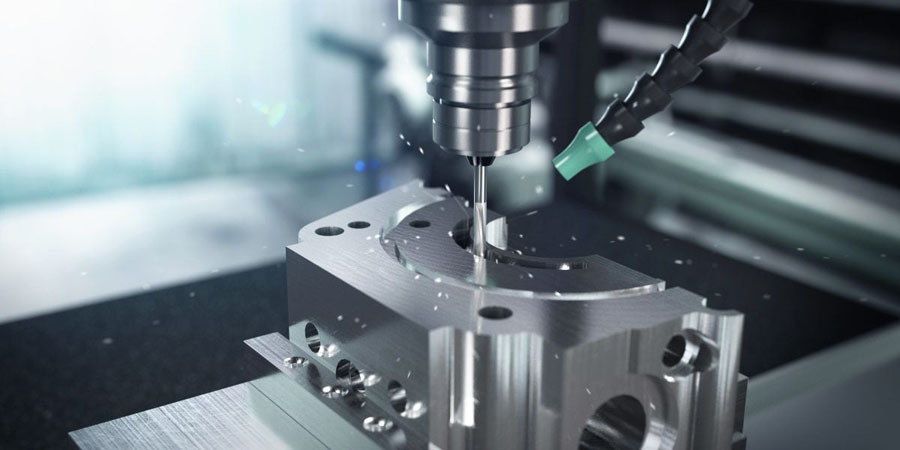
Micro CNC milling is widely used to create miniature pockets, slots, channels, and three-dimensional surfaces. High-speed spindles combined with extremely small cutting tools allow manufacturers to machine complex features with outstanding precision.
Micro turning is commonly used for cylindrical components such as miniature shafts, pins, bushings, and medical device parts. Precision CNC lathes maintain excellent concentricity and dimensional consistency even on extremely small diameters.
Micro drilling enables the production of very small holes used in fuel injectors, surgical instruments, electronic components, and microfluidic devices. Specialized drills and carefully controlled machining parameters minimize tool deflection and breakage.
Thread milling, micro engraving, and precision deburring are also frequently incorporated into micromachining projects to produce fully functional miniature components with high-quality finishes.
Materials Suitable for Micromachining
Material selection significantly influences machining performance and component quality.
Aluminum remains one of the most commonly machined materials because of its excellent machinability, low cutting forces, and good dimensional stability. Stainless steel is widely used for medical instruments, food processing equipment, and industrial components requiring corrosion resistance.
Titanium is frequently selected for aerospace and biomedical applications because of its high strength-to-weight ratio and excellent biocompatibility. However, its relatively poor machinability requires optimized cutting strategies and specialized tooling.
Copper and brass are often used for electrical connectors, heat transfer components, and precision electronic parts. Engineering plastics such as PEEK, Delrin (POM), PTFE, and polycarbonate are also popular choices because they combine lightweight performance with excellent chemical resistance and electrical insulation properties.
The ability to machine these materials with micron-level accuracy makes CNC micromachining suitable for an exceptionally wide range of applications.
Design Considerations for Precision Micromachining
Designing components for micromachining requires careful consideration of manufacturing limitations.
Feature size should remain compatible with available cutting tool diameters. Extremely narrow slots or sharp internal corners may require specialized tooling that increases machining complexity and production cost.
Wall thickness must also be evaluated carefully. Very thin walls may deform during machining if cutting forces are not properly controlled, particularly when machining softer metals or engineering plastics.
Tolerance specifications should reflect actual functional requirements. While micromachining is capable of extremely tight tolerances, unnecessarily restrictive specifications increase machining time, inspection requirements, and manufacturing costs.
Designers should also minimize unnecessary deep cavities and excessively high aspect-ratio features, which can reduce tool rigidity and increase the risk of tool breakage.
Early collaboration between design engineers and manufacturing specialists often results in more manufacturable components while maintaining required product performance.
Applications Across High-Precision Industries
Micromachining has become an indispensable manufacturing technology across numerous high-tech industries.
Medical device manufacturers rely on micromachining to produce surgical instruments, orthopedic implants, catheter components, dental devices, and minimally invasive medical tools. These products demand exceptional dimensional accuracy and superior surface quality to ensure patient safety and regulatory compliance.
The electronics industry uses micromachining to manufacture miniature connectors, semiconductor components, sensor housings, precision contacts, and communication devices. As electronic products continue to shrink, the ability to machine increasingly smaller features has become a competitive advantage.
In the aerospace sector, micromachining supports the production of lightweight precision components used in fuel systems, navigation equipment, sensors, actuators, and satellite technologies. Tight tolerances and reliable repeatability are essential for maintaining performance in demanding operating environments.
Manufacturers in the photonics and optics industries also depend on micromachining to create precision optical mounts, laser components, microchannels, and alignment structures that require micron-level accuracy.
Quality Control in Micromachining
Inspection plays an equally important role in micromachining because dimensional deviations measured in only a few microns can affect product performance.
Manufacturers typically use coordinate measuring machines (CMMs), optical measurement systems, vision inspection equipment, laser microscopes, and high-magnification imaging systems to verify miniature features without damaging delicate components.
Process stability is equally important. Continuous monitoring of tool wear, spindle performance, thermal variation, and machine calibration helps maintain consistent quality throughout production.
By integrating inspection directly into the manufacturing workflow, companies can reduce scrap rates while ensuring every component meets strict dimensional and functional requirements.
Choosing the Right Micromachining Partner
Selecting an experienced micromachining supplier is critical for achieving successful project outcomes.
A qualified manufacturing partner should possess advanced CNC equipment specifically designed for micro-scale machining, along with expertise in tooling selection, process optimization, and precision quality control. Engineering support during the design phase can also help simplify complex geometries and improve manufacturability before production begins.
In addition to technical capability, manufacturers should evaluate production capacity, inspection equipment, material expertise, and experience serving industries with demanding precision requirements.
Working with an experienced supplier enables OEMs to reduce development risks while accelerating the transition from prototype to production.
Conclusion
Micromachining has become a foundational technology for manufacturing miniature, high-precision components that conventional machining methods cannot efficiently produce. By combining advanced CNC equipment, specialized tooling, optimized machining strategies, and rigorous quality control, manufacturers can achieve exceptional dimensional accuracy, complex geometries, and superior surface finishes across a wide range of engineering materials.
From rapid prototyping to precision production, CNC micromachining enables companies to develop innovative products for medical, aerospace, electronics, semiconductor, and industrial applications. As products continue to become smaller and more sophisticated, the demand for reliable micromachining services will continue to grow, making precision manufacturing an increasingly important competitive advantage.