


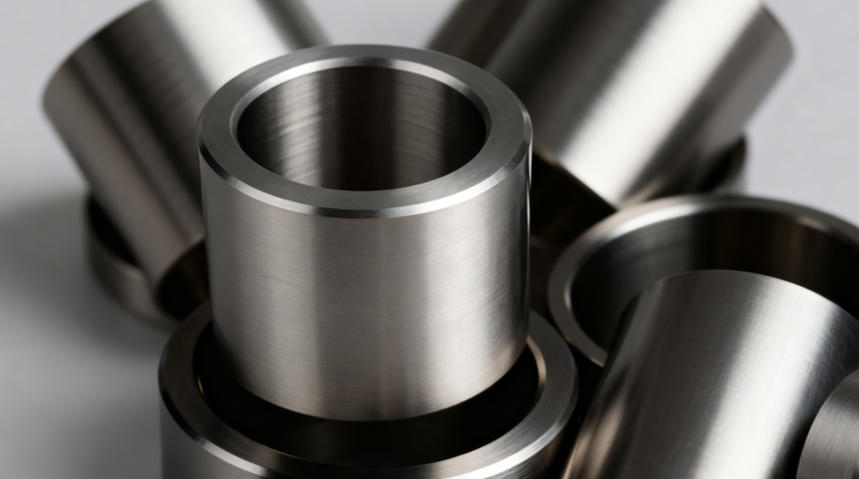
Bushings are critical components used in countless mechanical systems, from automotive suspensions and industrial machinery to aerospace equipment and medical devices. While standard bushings can meet the needs of many applications, industries with unique operating conditions often require custom bushings designed to specific dimensions, materials, tolerances, and performance requirements.
Choosing the right custom bushing manufacturer is therefore an important decision. A qualified supplier can deliver high-quality components that improve equipment performance, reduce maintenance costs, and extend service life. On the other hand, selecting an inexperienced manufacturer may result in dimensional inaccuracies, material failures, delayed deliveries, and increased production costs.
This guide explores the key factors engineers, purchasing managers, and product developers should consider when evaluating custom bushing manufacturers.
Why Choosing the Right Manufacturer Matters
Custom bushings are often designed for demanding applications where precision and reliability are essential. Unlike off-the-shelf components, custom bushings may require specialized materials, tight tolerances, unique geometries, or advanced surface treatments.
Even minor manufacturing defects can lead to excessive wear, vibration, alignment problems, or premature equipment failure. Therefore, selecting a capable manufacturing partner is just as important as selecting the correct bushing design.
A reliable manufacturer should not only produce parts according to specifications but also provide engineering support, quality assurance, and long-term production consistency.
Assess Manufacturing Capabilities
One of the first factors to evaluate is the manufacturer’s production capability.
Custom bushings can vary significantly in size, material, complexity, and performance requirements. A qualified manufacturer should have the necessary equipment and expertise to handle your specific project.
Modern CNC machining capabilities are particularly important for custom bushing production. Advanced CNC turning centers, Swiss machining systems, and multi-axis machining equipment allow manufacturers to achieve tighter tolerances and more consistent quality.
When reviewing potential suppliers, consider questions such as:
- What machining technologies do they use?
- Can they handle both prototypes and production volumes?
- What tolerance levels can they achieve?
- Do they offer secondary operations such as grinding, honing, or surface finishing?
Manufacturers with a diverse range of machining capabilities are often better equipped to support complex custom projects.
Evaluate Material Expertise
Material selection plays a major role in bushing performance.
Depending on the application, bushings may be manufactured from:
- Bronze
- Brass
- Carbon steel
- Stainless steel
- Aluminum
- PTFE composites
- Engineering plastics
- Oil-impregnated materials
Different materials offer varying levels of wear resistance, corrosion resistance, load capacity, and friction performance.
A reputable manufacturer should understand the strengths and limitations of various bushing materials and be capable of recommending the most suitable option for the intended operating environment.
Manufacturers with experience across multiple industries are often better positioned to provide valuable material recommendations during the design phase.
Review Engineering and Design Support
Not every customer provides fully optimized engineering drawings.
In many cases, manufacturers play an important role in improving part designs for manufacturability, cost reduction, and performance optimization.
Strong engineering support can help identify potential issues before production begins. For example, an experienced supplier may recommend adjustments to tolerances, wall thicknesses, lubrication features, or material selection to improve service life and reduce manufacturing costs.
Companies that offer Design for Manufacturability (DFM) assistance often provide greater long-term value than suppliers focused solely on production.
Examine Quality Control Systems
Quality control is one of the most important factors when evaluating custom bushing manufacturers.
Bushings often operate in applications where dimensional accuracy directly affects assembly performance and equipment reliability. Even small deviations can result in excessive clearance, improper fit, or premature wear.
Manufacturers should have clearly defined quality management procedures supported by modern inspection equipment.
Important quality indicators include:
- First article inspection procedures
- In-process quality monitoring
- Final dimensional verification
- Material traceability systems
- Calibration programs
- Statistical process control methods
Advanced inspection equipment such as Coordinate Measuring Machines (CMMs), optical measurement systems, and surface roughness testers can further improve quality assurance.
Verify Industry Certifications
Industry certifications provide evidence that a manufacturer follows recognized quality standards.
Depending on the application, relevant certifications may include:
- ISO 9001
- IATF 16949 for automotive manufacturing
- AS9100 for aerospace production
- ISO 13485 for medical devices
While certifications alone do not guarantee superior quality, they often indicate that the manufacturer has established documented procedures for quality management and continuous improvement.
For highly regulated industries, certification may be a mandatory requirement.
Evaluate Experience and Industry Knowledge
Experience often translates into better problem-solving capabilities and more efficient production processes.
Manufacturers with extensive experience producing custom bushings are more likely to understand common design challenges, material performance characteristics, and industry-specific requirements.
When evaluating suppliers, consider:
- How long have they been producing custom bushings?
- Which industries do they serve?
- Do they have experience with similar applications?
- Can they provide relevant case studies or project examples?
Industry-specific expertise can significantly reduce development risks and improve overall project outcomes.
Consider Production Capacity and Scalability
Production requirements can change over time.
A supplier that meets current needs may struggle to support future growth if production capacity is limited.
When selecting a manufacturer, evaluate their ability to handle:
- Prototype development
- Low-volume production
- Medium-volume manufacturing
- Large-scale production runs
Scalable production capabilities allow companies to maintain a consistent supplier relationship throughout the entire product lifecycle.
Manufacturers with flexible production systems can often accommodate changing demand more effectively.
Assess Lead Times and Delivery Performance
Reliable delivery is critical for maintaining production schedules and avoiding costly downtime.
Even the highest-quality bushings have limited value if they cannot be delivered when needed.
Key questions to ask include:
- What are typical lead times?
- How quickly can prototypes be produced?
- Do they offer expedited manufacturing services?
- What is their on-time delivery performance?
Manufacturers with efficient scheduling systems and strong supply chain management are generally better positioned to meet delivery commitments.
Review Surface Finishing and Secondary Services
Many custom bushings require additional processing beyond basic machining.
Common secondary operations include:
- Heat treatment
- Grinding
- Polishing
- Anodizing
- Electroless nickel plating
- Zinc plating
- PTFE coating
- Lubrication treatments
Working with a manufacturer that can provide these services in-house or through qualified partners simplifies project management and helps maintain quality consistency.
It can also reduce lead times and logistical complexity.
Analyze Communication and Customer Support
Effective communication is often overlooked during supplier selection.
A manufacturer may possess excellent technical capabilities, but poor communication can lead to misunderstandings, delays, and costly mistakes.
Strong suppliers typically provide:
- Fast quotation responses
- Clear technical feedback
- Dedicated project management
- Transparent production updates
- Responsive customer support
Open communication becomes particularly important during prototype development and design revisions.
A collaborative relationship often leads to better project outcomes and long-term partnerships.
Compare Cost Beyond Unit Price
Price is naturally an important consideration, but it should not be the sole factor when evaluating manufacturers.
The lowest quotation may not represent the best overall value.
Factors that contribute to total cost include:
- Product quality
- Tool life and durability
- Delivery reliability
- Engineering support
- Inspection capabilities
- Warranty policies
- Long-term performance
A slightly higher-priced supplier may ultimately reduce overall costs through improved quality, lower failure rates, and more reliable service.
Request Samples and Prototype Production
Before committing to large production orders, it is often beneficial to evaluate sample parts or prototype runs.
Prototype production allows buyers to verify:
- Dimensional accuracy
- Material quality
- Surface finish
- Functional performance
- Manufacturing consistency
Sample evaluation provides valuable insight into the manufacturer’s capabilities and helps identify potential issues before full-scale production begins.
Building a Long-Term Manufacturing Partnership
The most successful supplier relationships extend beyond individual purchase orders.
Rather than viewing a manufacturer as simply a vendor, many companies benefit from developing long-term strategic partnerships. Experienced manufacturers can contribute valuable knowledge regarding design optimization, cost reduction opportunities, and process improvements throughout the product lifecycle.
A collaborative relationship often leads to greater efficiency, improved product quality, and faster problem resolution over time.
Conclusion
Selecting the right custom bushing manufacturer requires more than comparing prices. Factors such as machining capability, material expertise, quality control systems, engineering support, production capacity, and communication all play important roles in determining long-term project success.
By carefully evaluating potential suppliers and focusing on overall value rather than unit cost alone, manufacturers can identify reliable partners capable of producing high-quality custom bushings that meet performance requirements and support future business growth.
A thorough evaluation process not only reduces manufacturing risks but also helps establish productive partnerships that contribute to improved product reliability, operational efficiency, and long-term competitiveness.