


In CNC machining, achieving tight tolerances is only part of the process. Equally important is verifying that those tolerances are consistently met through accurate measurement. From a quality inspector’s perspective, measurement errors are one of the most overlooked causes of part rejection, assembly issues, and customer complaints.
Even when machining processes are well controlled, improper measurement practices can lead to incorrect conclusions about part quality. In many cases, parts are either falsely accepted or unnecessarily rejected due to measurement mistakes rather than actual machining defects.
Understanding these common errors—and how to avoid them—is essential for maintaining precision, reducing waste, and ensuring reliable production outcomes.
Misinterpreting Engineering Drawings and Tolerances
One of the most fundamental measurement mistakes begins before inspection even starts: misunderstanding the engineering drawing.
Inspectors must clearly interpret dimensions, geometric tolerances (GD&T), and datum references. Misreading a tolerance zone or referencing the wrong datum can result in incorrect measurement results.
For example, measuring a feature relative to the wrong datum may indicate that a part is out of tolerance when, in reality, it meets design requirements.
From practical experience, proper training in GD&T and careful review of drawings before inspection are critical steps that should never be skipped.
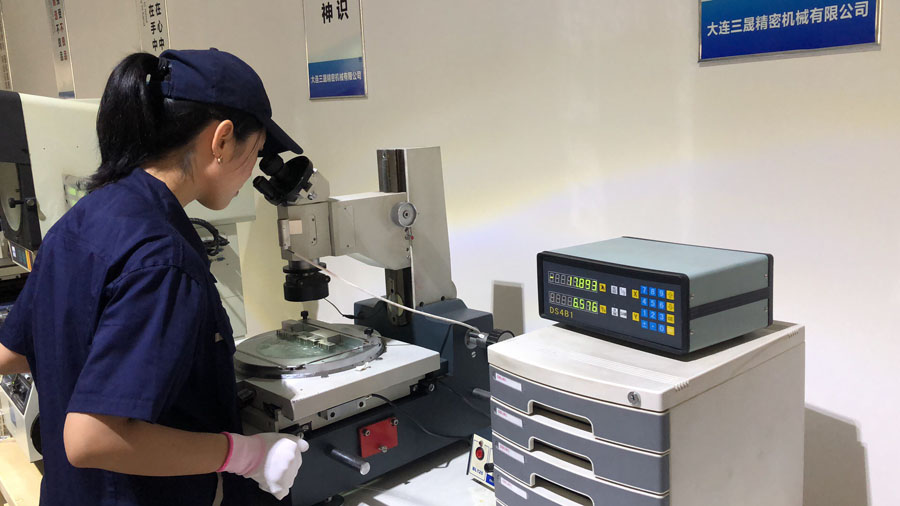
Using the Wrong Measurement Tool
Not all measurement tools are suitable for every feature. A common mistake is using general tools such as calipers for measurements that require higher precision.
Calipers may be sufficient for rough dimensions, but they lack the accuracy required for tight tolerances. Similarly, attempting to measure complex geometries with basic tools often leads to unreliable results.
For high-precision components, appropriate instruments such as micrometers, bore gauges, or coordinate measuring machines (CMMs) should be used.
Selecting the correct tool based on tolerance requirements and feature geometry is essential for accurate inspection.
Ignoring Calibration and Tool Condition
Measurement tools must be properly calibrated to provide accurate results. However, in busy production environments, calibration is sometimes overlooked.
Using a tool that is out of calibration introduces systematic error into every measurement. Additionally, worn or damaged measuring instruments can produce inconsistent readings.
Regular calibration schedules and routine inspection of measurement tools are necessary to maintain accuracy. From a quality control standpoint, measurement equipment should be treated with the same level of importance as machining equipment.
Applying Inconsistent Measurement Force
Manual measurement techniques often introduce variability due to inconsistent force applied by the operator.
For example, when using a micrometer, applying too much force can slightly deform the part or compress the measuring surfaces, leading to incorrect readings. Applying too little force may result in incomplete contact and inaccurate measurements.
This issue becomes more significant when measuring softer materials such as aluminum or plastics.
Using tools with controlled measuring force, such as ratchet-stop micrometers, and maintaining consistent technique helps minimize this source of error.
Measuring at the Wrong Location
Another common mistake is measuring the correct feature but at the wrong location.
Surface irregularities, tool marks, or slight tapering can cause variations across a single feature. If measurements are taken at inconsistent points, results may not accurately represent the true dimension.
For example, measuring a shaft diameter at only one point may overlook out-of-roundness or taper issues.
Best practice is to measure multiple points and follow defined inspection procedures to ensure consistency and reliability.
Neglecting Environmental Factors
Temperature and environmental conditions have a significant impact on measurement accuracy, especially in high-precision machining.
Materials expand and contract with temperature changes. Even small variations can affect measurements when tolerances are tight. Measuring a part immediately after machining, when it is still warm, can lead to inaccurate results.
Humidity and vibration can also influence measurement outcomes.
To minimize these effects, inspections should be performed in controlled environments, and parts should be allowed to stabilize at room temperature before measurement.
Improper Fixturing During Measurement
Just as in machining, proper fixturing is essential during inspection.
If a part is not properly supported or aligned, it may deform slightly or shift during measurement. This can lead to incorrect readings, particularly for thin-walled or flexible components.
Using appropriate fixtures, supports, and datum alignment during inspection ensures that measurements reflect the true geometry of the part.
Overlooking Surface Condition and Cleanliness
Surface contamination is an often underestimated factor in measurement accuracy.
Oil, coolant residue, chips, or dust on the part surface can interfere with measurement tools, especially when dealing with tight tolerances. Even a small particle trapped between the measuring surfaces can cause significant errors.
Before inspection, parts should be thoroughly cleaned and visually checked to ensure that measurement surfaces are free from debris.
Lack of Repeatability and Verification
Reliable measurement requires repeatability. Taking a single measurement and assuming it is correct can lead to errors.
Variations between repeated measurements may indicate issues such as operator inconsistency, tool instability, or part variability.
From a quality inspection standpoint, it is good practice to measure critical dimensions multiple times and verify consistency. When possible, automated systems such as CMMs can improve repeatability and reduce human error.
Failing to Document and Analyze Measurement Data
Measurement is not just about checking dimensions—it is also about understanding trends.
Failing to record and analyze measurement data means missing opportunities to identify process issues such as tool wear, machine drift, or fixture misalignment.
By tracking measurement data over time, manufacturers can detect patterns and take corrective actions before defects occur.
Proper documentation also supports traceability, which is essential for quality audits and customer confidence.
Conclusion
Measurement accuracy is a critical component of CNC machining quality control. Even when machining processes are optimized, errors in measurement can lead to incorrect decisions, increased scrap rates, and reduced customer satisfaction.
From a quality inspector’s perspective, avoiding common measurement mistakes requires a combination of proper training, correct tool selection, controlled environments, and consistent inspection procedures.
By focusing on measurement reliability and repeatability, manufacturers can ensure that their parts not only meet design specifications but also perform as intended in real-world applications. Ultimately, precise measurement is the foundation of precision manufacturing.