


Material selection plays a critical role in CNC machining, directly affecting machining efficiency, cost, tool life, and final part quality. Among the most commonly used materials, aluminum and stainless steel are frequently compared due to their distinct properties and wide range of applications.
While both materials are widely used across industries such as aerospace, automotive, and industrial manufacturing, they present very different machining challenges. Understanding these differences helps engineers and procurement teams make informed decisions based on performance requirements and production efficiency.
Material Characteristics and Their Impact on Machining
Aluminum is known for its lightweight nature, excellent thermal conductivity, and relatively low hardness. These properties make it one of the easiest materials to machine. It allows for high cutting speeds, efficient chip removal, and smooth surface finishes.
Stainless steel, on the other hand, is significantly stronger and harder. It offers excellent corrosion resistance and durability, but these advantages come with increased machining difficulty. Stainless steel tends to generate more heat during cutting and is more resistant to deformation, requiring greater cutting forces.
From a machining perspective, aluminum favors speed and efficiency, while stainless steel demands control and precision.
Cutting Speed and Tool Life
One of the most noticeable differences between these materials is the allowable cutting speed.
Aluminum can be machined at high spindle speeds with relatively low cutting resistance. This results in shorter cycle times and higher productivity. Tool wear is generally lower, especially when proper cutting conditions are maintained.
In contrast, stainless steel requires slower cutting speeds to prevent excessive heat buildup. The material’s toughness and work-hardening behavior can accelerate tool wear, especially if cutting parameters are not optimized.
As a result, machining stainless steel often leads to higher tooling costs and more frequent tool replacement compared to aluminum.
Heat Generation and Thermal Management
Heat management is a major challenge when machining stainless steel. Due to its lower thermal conductivity, heat tends to concentrate in the cutting zone rather than dissipating quickly. This can lead to:
- Tool overheating and premature wear
- Surface discoloration or thermal damage
- Dimensional inaccuracies due to thermal expansion
Aluminum behaves differently. Its high thermal conductivity allows heat to dissipate quickly, reducing the risk of localized overheating. However, excessive heat can still cause issues such as material softening or built-up edge formation.
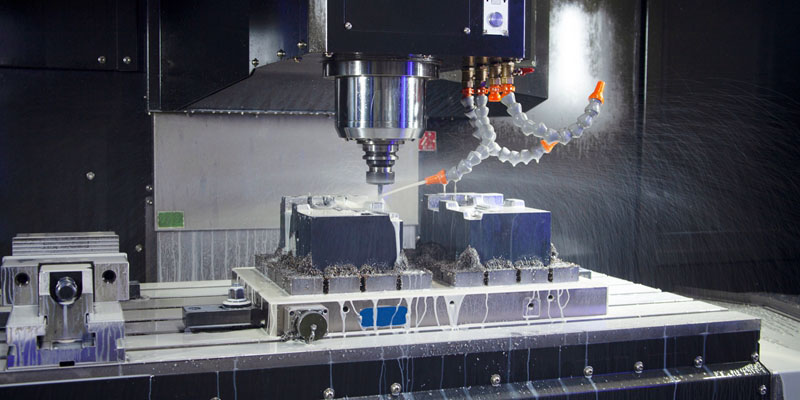
Proper coolant application is important for both materials, but it is especially critical when machining stainless steel.
Chip Formation and Evacuation
Chip control is another key difference.
Aluminum typically produces soft, continuous chips that are easy to evacuate when proper tooling is used. However, if chip evacuation is not managed properly, chips may stick to the cutting tool, leading to built-up edge (BUE) and surface finish issues.
Stainless steel tends to produce tougher, stringy chips that are more difficult to break. These chips can wrap around the tool or workpiece, increasing the risk of surface damage and tool breakage.
Using appropriate tool geometry and chip-breaking strategies is essential when machining stainless steel.
Surface Finish Quality
Achieving a high-quality surface finish is generally easier with aluminum. Its softer nature allows for smoother cuts and finer finishes, especially when sharp tools and optimized cutting parameters are used.
Stainless steel presents more challenges in this area. Its tendency to work-harden means that improper cutting conditions can lead to rough surfaces, tearing, or tool marks. Maintaining a consistent cutting process is critical to achieving acceptable surface quality.
In many cases, stainless steel parts may require additional finishing processes to meet surface requirements.
Tool Selection and Geometry
Tool selection plays a crucial role in overcoming machining challenges.
For aluminum, tools with sharp cutting edges, high rake angles, and polished flutes are typically used to reduce friction and prevent chip adhesion.
For stainless steel, tools must be more robust and wear-resistant. Coated carbide tools are commonly used to withstand higher temperatures and cutting forces. Tool geometry is designed to reduce heat buildup and improve chip breaking.
Selecting the correct tool for each material significantly impacts machining performance and cost efficiency.
Workholding and Stability
Workholding requirements also differ between these materials.
Aluminum, being softer, is more prone to deformation under excessive clamping force. Care must be taken to ensure secure but balanced clamping to avoid distortion, especially for thin-walled parts.
Stainless steel, due to its higher strength, requires more rigid setups to handle increased cutting forces. Any instability in fixturing can lead to vibration, affecting both tool life and surface finish.
Proper fixture design is essential for both materials but becomes even more critical when machining stainless steel.
Cost Implications
From a cost perspective, aluminum is generally more economical to machine. Faster cutting speeds, longer tool life, and reduced machining time contribute to lower overall production costs.
Stainless steel, while offering superior strength and corrosion resistance, increases machining costs due to slower speeds, higher tool wear, and more complex process control.
Therefore, material selection should balance performance requirements with manufacturing efficiency and budget constraints.
Choosing the Right Material for Your Application
The choice between aluminum and stainless steel ultimately depends on the application.
Aluminum is ideal for lightweight components, rapid prototyping, and applications where machining efficiency and cost are priorities.
Stainless steel is better suited for parts that require high strength, corrosion resistance, and durability, even if it involves higher machining complexity and cost.
Understanding the machining challenges associated with each material helps manufacturers optimize processes and achieve better overall results.
Conclusion
Aluminum and stainless steel each present unique advantages and machining challenges. Aluminum offers speed, efficiency, and ease of machining, while stainless steel provides strength and durability at the cost of increased machining difficulty.
From an engineering and production perspective, success lies in selecting the right material for the application and applying appropriate machining strategies to overcome material-specific challenges. By doing so, manufacturers can ensure both performance and cost-effectiveness in their CNC machining operations.