


In today’s competitive manufacturing environment, speed and precision are no longer optional—they are essential. Companies that can move from concept to market faster gain a significant advantage, whether they operate in aerospace, automotive, medical, or industrial equipment sectors. This is where CNC prototyping plays a critical role.
CNC prototyping combines digital design with precision machining to produce functional prototypes quickly and accurately. Unlike traditional prototyping methods that may require tooling, molds, or extended setup times, CNC machining allows manufacturers to create high-quality prototype parts directly from CAD data. This capability dramatically shortens development timelines while maintaining production-grade quality.
What Is CNC Prototyping?
CNC prototyping refers to the process of using Computer Numerical Control (CNC) machining to manufacture early-stage product models or functional test parts. Engineers convert 3D CAD designs into machining programs, which guide cutting tools to shape raw materials into finished components.
Because the process uses the same subtractive manufacturing principles as full-scale production, prototypes closely replicate final parts in geometry, tolerances, and material performance. This makes CNC prototyping especially valuable for functional testing rather than just visual evaluation.
CNC machines can work with a wide range of materials, including aluminum, stainless steel, titanium, brass, engineering plastics, and composites. This material flexibility allows engineers to validate product performance under real-world conditions before committing to mass production.
Faster Design Validation
One of the most important benefits of CNC prototyping is the ability to validate designs quickly. Instead of waiting weeks for tooling or molds, manufacturers can produce prototype parts within days.
Physical prototypes allow teams to:
- Evaluate dimensional accuracy
- Test assembly fit
- Verify mechanical strength
- Identify design flaws early
By catching problems during the prototype phase, companies avoid costly redesigns later in production. Iterative testing becomes faster and more efficient, enabling continuous design refinement.
Shorter Time-to-Market
Speed is often the deciding factor in product success. CNC prototyping reduces the gap between design and commercialization by eliminating many intermediate steps.
Traditional manufacturing may require:
- Mold fabrication
- Tooling setup
- Specialized fixtures
- Long supplier lead times
CNC prototyping bypasses these barriers. Once CAD data is finalized, machining can begin immediately. This streamlined workflow helps companies launch products faster and respond quickly to market demands.
For startups and OEM manufacturers alike, reduced time-to-market can translate directly into competitive advantage and increased revenue opportunities.
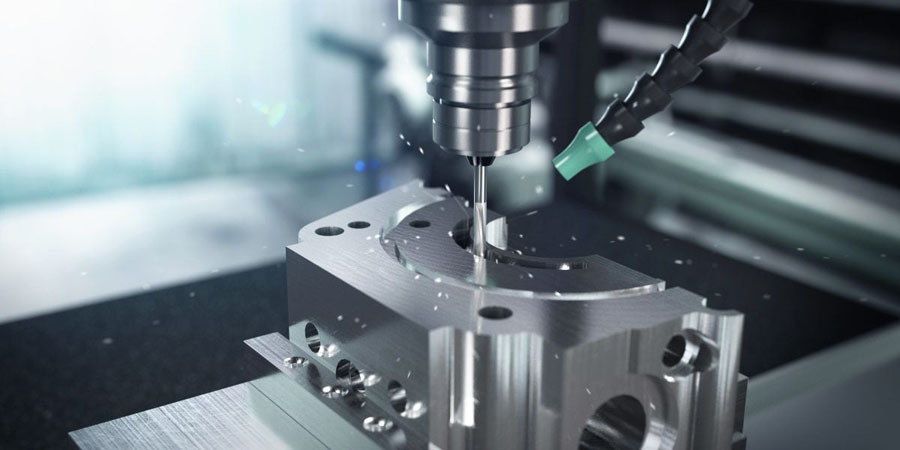
High Precision and Tight Tolerances
Precision is another defining strength of CNC prototyping. Modern CNC equipment can achieve extremely tight tolerances and repeatable accuracy, ensuring prototype parts match engineering specifications.
This level of precision is critical in industries such as:
- Aerospace
- Medical devices
- Automotive engineering
- Electronics
Functional prototypes must perform like final products. CNC machining ensures that threads, mating surfaces, and critical geometries are manufactured to exact standards, supporting reliable testing and certification processes.
Real Material Performance Testing
Unlike some additive or soft-tooling methods, CNC prototyping uses production-grade materials. This allows engineers to evaluate how parts behave under real operating conditions.
Performance testing may include:
- Thermal resistance
- Mechanical load testing
- Corrosion resistance
- Wear performance
For example, aerospace components can be machined from titanium alloys, while automotive prototypes may use high-strength aluminum. Testing with actual materials provides accurate data for design approval and regulatory compliance.
Design Flexibility and Rapid Iteration
Product development rarely follows a straight line. Design revisions are inevitable as engineers refine performance, manufacturability, and cost efficiency.
CNC prototyping supports rapid iteration because design updates only require CAD file modifications. There is no need to rebuild molds or reconfigure tooling systems extensively.
This flexibility allows teams to:
- Test multiple design versions
- Optimize weight reduction
- Improve structural strength
- Enhance assembly efficiency
Rapid iteration reduces engineering risk and supports innovation without excessive cost penalties.
Cost Efficiency in Early Development
Although CNC machining is a precision process, it can still be cost-effective during the prototyping phase. The elimination of tooling and mold expenses significantly reduces upfront investment.
Low-volume CNC prototypes are ideal for:
- Concept validation
- Investor demonstrations
- Pilot production
- Market testing
By investing modestly in prototype runs, companies can validate product feasibility before scaling to full production. This minimizes financial risk and supports smarter resource allocation.
Surface Finish and Functional Quality
CNC prototyping also delivers superior surface finishes compared to many alternative prototyping technologies. Machined parts can achieve smooth textures, tight edges, and fine details directly from the cutting process.
Additional post-processing options include:
- Anodizing
- Powder coating
- Bead blasting
- Polishing
- Plating
These finishing services allow prototypes to closely resemble final commercial products, which is especially valuable for customer presentations or trade show demonstrations.
Seamless Transition to Production
Another strategic advantage of CNC prototyping is the smooth transition it enables between development and manufacturing. Since prototypes are produced using production-capable equipment, scaling up becomes far more straightforward.
Manufacturers can:
- Reuse machining programs
- Maintain tolerance consistency
- Apply validated process parameters
- Reduce production ramp-up time
This continuity eliminates many uncertainties that arise when switching from prototype methods to mass manufacturing technologies.
Applications Across Industries
CNC prototyping supports innovation across a broad range of sectors.
Aerospace: Structural brackets, housings, turbine components
Automotive: Engine parts, transmission housings, custom fixtures
Medical: Surgical tools, orthopedic implants, diagnostic equipment
Electronics: Enclosures, heat sinks, precision connectors
Industrial Equipment: Valves, pump bodies, automation components
Each of these industries relies on precision, durability, and regulatory compliance—factors that CNC prototyping is uniquely positioned to support.
CNC Prototyping vs. Other Methods
While 3D printing and injection molding also serve prototyping needs, CNC machining offers distinct advantages.
Compared to 3D printing:
CNC provides stronger parts, better surface finishes, and tighter tolerances.
Compared to injection molding:
CNC avoids mold costs and long setup cycles, making it more suitable for early development.
This balance of speed, strength, and precision makes CNC prototyping one of the most versatile product development tools available.
Choosing the Right CNC Prototyping Partner
To fully benefit from CNC prototyping, selecting an experienced machining partner is essential. Key evaluation factors include:
- Material expertise
- Equipment capability
- Tolerance control
- Lead time reliability
- Engineering support
A capable supplier can also provide design-for-manufacturability (DFM) feedback, helping optimize parts for both prototyping and production efficiency.
Conclusion
CNC prototyping has become a cornerstone of modern product development. By combining speed, precision, and material versatility, it enables manufacturers to move from concept to commercialization with confidence.
From rapid design validation to real-world performance testing, CNC prototypes provide the data and reliability needed to make informed engineering decisions. Companies that leverage CNC prototyping effectively can reduce development risk, shorten launch timelines, and maintain a strong competitive edge in fast-moving global markets.