


In modern CNC machining, workholding plays a crucial role in achieving high precision, consistent quality, and efficient production. Even with advanced CNC machines and optimized cutting tools, improper workholding can lead to problems such as vibration, part movement, dimensional errors, and longer setup times.
Among the most commonly used workholding solutions in precision manufacturing are fixture plates, tooling plates, and modular fixture systems. These technologies help manufacturers improve machining stability, reduce setup time, and maintain repeatable positioning during production.
Although these terms are sometimes used interchangeably, each solution serves a different purpose. Fixture plates focus on providing a flexible and standardized mounting platform, tooling plates are designed for higher precision and repeatability, while modular fixtures offer adaptability for changing production requirements.
Understanding the differences between these CNC workholding solutions allows manufacturers to select the most suitable approach for prototype machining, low-volume production, and high-precision manufacturing applications.
The Importance of Workholding in CNC Machining
Workholding refers to the methods and equipment used to securely position and support a workpiece during CNC machining operations. A reliable workholding system must resist cutting forces while maintaining accurate positioning throughout the machining process.
In precision manufacturing, even a small amount of movement between the workpiece and fixture can affect dimensional accuracy, surface finish, and overall part quality. This is especially important for industries such as aerospace, automotive, medical devices, robotics, and industrial equipment, where components often require strict tolerances.
An effective workholding system provides several advantages, including improved machining accuracy, shorter setup times, better production repeatability, and reduced manufacturing costs. As production requirements become more flexible and product cycles become shorter, advanced fixture solutions have become increasingly important in CNC manufacturing.
What Is a Fixture Plate?
A fixture plate is a precision-machined mounting plate installed on a CNC machine table to provide a standardized and repeatable workholding surface. It usually contains a series of threaded holes, locating holes, and precision mounting patterns that allow different clamps, vises, and custom fixtures to be installed quickly.
Traditional CNC setups often require operators to manually align workholding devices using machine table slots. This process can be time-consuming and may introduce positioning errors. Fixture plates solve this problem by creating a consistent reference system that allows faster setup changes and improved repeatability.
Fixture plates are widely used in prototype machining, small-batch manufacturing, and production environments where flexibility is important. They allow manufacturers to quickly change between different part configurations without completely redesigning the workholding system.
What Is a Tooling Plate?
A tooling plate is a precision workholding platform designed for applications that require extremely accurate positioning and high repeatability. Compared with standard fixture plates, tooling plates typically have tighter machining tolerances and more advanced locating systems.
Tooling plates are commonly used when manufacturers need consistent results across repeated production runs. They provide a stable foundation for custom fixtures and specialized tooling, making them suitable for complex parts, precision components, and demanding manufacturing environments.
In industries where component accuracy is critical, tooling plates help maintain consistent fixture locations and reduce variation between machining operations. They are often used together with custom clamps, locating pins, and dedicated tooling systems to achieve maximum machining reliability.
Fixture Plate vs Tooling Plate: Understanding the Difference
Although fixture plates and tooling plates have similar functions, their main difference lies in the level of precision and intended application.
Fixture plates are generally designed for flexibility. They provide a universal mounting solution that allows manufacturers to quickly adapt setups for different parts. They are ideal for prototypes, engineering development, and low-volume production where frequent changes are expected.
Tooling plates are designed for repeatability and precision. They are better suited for production environments where the same components must be manufactured repeatedly with consistent positioning and minimal variation.
In simple terms, fixture plates provide versatility, while tooling plates provide maximum accuracy and production stability.
What Are Modular Fixtures?
A modular fixture system is a flexible workholding solution built from standardized components that can be assembled and adjusted according to different part requirements.
Unlike dedicated fixtures that are designed for only one specific component, modular fixtures use interchangeable elements such as base plates, locating pins, clamps, supports, and adjustable stops. These components can be rearranged to accommodate different part sizes and geometries.
This flexibility makes modular fixtures especially valuable for prototype development and low-volume CNC production. Manufacturers can quickly create new fixture configurations without investing significant time and cost into designing completely new tooling.
As modern manufacturing moves toward shorter product cycles and customized production, modular fixtures provide an efficient solution for companies that need both flexibility and precision.
Benefits of Modular Fixture Systems in CNC Manufacturing
One of the biggest advantages of modular fixtures is their ability to reduce fixture development time and cost. Instead of creating a dedicated fixture for every new component, manufacturers can reuse existing modular elements and quickly modify the setup.
Modular fixtures also improve production efficiency by reducing machine preparation time. Faster fixture changes allow CNC machines to spend more time performing machining operations rather than waiting for setup adjustments.
Another important benefit is scalability. Modular systems can support prototype quantities, small-batch production, and even certain production applications without requiring major tooling investments.
For companies producing multiple part variations or frequently updating product designs, modular fixtures provide the flexibility needed to respond quickly to changing manufacturing demands.
How Fixture Plates and Modular Fixtures Work Together
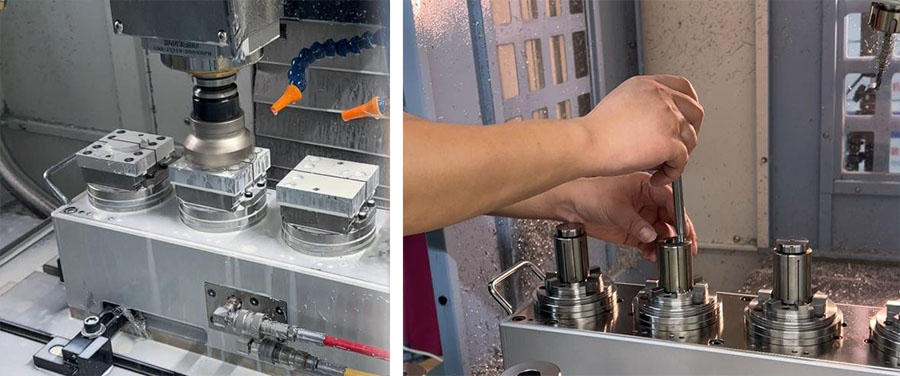
Fixture plates and modular fixtures are often used together to create a complete CNC workholding solution.
The fixture plate provides a stable and accurately positioned base mounted on the CNC machine table. The modular fixture components are then installed on the plate to securely hold the specific workpiece.
This combination provides manufacturers with both repeatability and flexibility. The fixture plate ensures consistent positioning, while the modular fixture allows quick adjustments for different part designs.
This approach is particularly effective for prototype machining and low-volume production, where manufacturers need to balance accuracy, efficiency, and cost control.
Selecting the Right CNC Workholding Solution
Choosing between fixture plates, tooling plates, and modular fixtures depends on several factors, including production volume, part complexity, machining requirements, and budget considerations.
For prototype machining, flexibility is usually the highest priority. Modular fixtures and standard fixture plates are often the best choices because they allow quick adjustments as designs continue to evolve.
For low-volume manufacturing, a combination of fixture plates and modular fixtures provides an excellent balance between efficiency and investment cost. These systems reduce setup time while maintaining the flexibility needed for small production batches.
For high-volume production, dedicated tooling plates and custom fixtures may be more suitable because they maximize repeatability and cycle time efficiency.
The ideal workholding solution should not only secure the part but also improve the entire machining process.
Design Considerations for CNC Fixture Systems
A successful fixture design requires careful consideration of rigidity, accessibility, repeatability, and part protection.
The fixture must be strong enough to withstand cutting forces without excessive vibration. At the same time, it should provide sufficient tool clearance so CNC cutting tools can access all required machining areas.
Accurate locating features are essential for maintaining repeatability between setups. Proper clamping methods are also important because excessive force may deform thin-wall components, while insufficient clamping may allow part movement during machining.
Good fixture design also considers chip removal, maintenance requirements, and operator convenience to ensure stable production performance.
The Future of CNC Workholding Solutions
As manufacturing continues to move toward customization, shorter production cycles, and flexible production models, advanced workholding solutions will become increasingly important.
Traditional dedicated fixtures remain valuable for high-volume production, but fixture plates and modular fixture systems provide greater adaptability for modern manufacturing environments.
For companies producing prototypes, custom components, and small-batch products, flexible workholding solutions reduce production preparation time, lower tooling costs, and improve overall manufacturing efficiency.
Conclusion
Fixture plates, tooling plates, and modular fixtures are essential components of modern CNC machining systems. Each solution offers unique advantages depending on production requirements and manufacturing goals.
Fixture plates provide a flexible and standardized foundation for CNC workholding. Tooling plates deliver higher precision and repeatability for demanding production environments. Modular fixtures offer the adaptability required for prototype development and low-volume manufacturing.
By selecting the right workholding strategy, manufacturers can improve machining accuracy, reduce setup time, control production costs, and achieve consistent part quality. As CNC manufacturing continues to evolve, efficient and flexible fixture systems will remain a key factor in achieving higher productivity and competitive advantages.