


CNC machining has become one of the most important technologies in modern manufacturing. Industries such as aerospace, automotive, electronics, medical devices, and industrial automation all rely heavily on CNC machined parts because of their precision, consistency, and reliability.
When companies source CNC machining parts, they usually face an important decision: choosing between standard manufacturing and custom manufacturing. Although both approaches use CNC machining technology, they differ significantly in terms of cost, flexibility, lead time, precision requirements, and production efficiency. Understanding these differences helps manufacturers select the most suitable production strategy for their specific applications.
Understanding Standard Manufacturing in CNC Machining
Standard manufacturing refers to the production of parts that follow predefined dimensions, specifications, and industry standards. These components are typically produced in large quantities and are designed for general industrial use. Examples include standard brackets, shafts, bushings, fasteners, connectors, and various machine components that are commonly used across multiple industries.
Because these parts are standardized, manufacturers usually already have mature production processes, existing tooling, and optimized machining programs. This allows production to be highly efficient and repeatable. Standard parts are often kept in stock or can be produced quickly with minimal engineering adjustments.
One of the biggest advantages of standard manufacturing is cost efficiency. Since the same components are produced repeatedly, setup costs, programming costs, and tooling expenses can be spread across large production volumes. As a result, the price per part is generally much lower compared to custom CNC machining.
In addition, standard components simplify maintenance and replacement. Companies can easily source replacement parts without redesigning assemblies or modifying existing equipment. This interchangeability is especially important in industries where minimizing downtime is critical.
However, standard manufacturing also has limitations. Since the parts follow fixed specifications, there is less flexibility in design optimization. In applications requiring unique geometries, lightweight structures, or specialized performance characteristics, standard components may not fully meet engineering requirements.
Understanding Custom Manufacturing in CNC Machining
Custom manufacturing focuses on producing CNC machined parts according to specific customer drawings, application requirements, or unique engineering designs. Instead of relying on predefined dimensions, custom CNC machining allows every aspect of the component to be tailored to the intended application.
This manufacturing approach is commonly used in industries that demand high performance, advanced precision, or specialized functionality. Aerospace components, medical implants, robotics systems, semiconductor equipment, and high-performance automotive parts are all examples of products that frequently require custom CNC machining.
One of the greatest advantages of custom manufacturing is design flexibility. Engineers can optimize the geometry, material selection, surface finish, and tolerance requirements based on the exact operational conditions of the part. This allows manufacturers to achieve better mechanical performance, weight reduction, corrosion resistance, thermal stability, or assembly integration.
Custom CNC machining also supports innovation. As industries continue developing more advanced products, companies increasingly require components that cannot be achieved using standard parts alone. Custom manufacturing enables businesses to create highly specialized solutions that improve product performance and competitiveness.
Despite these advantages, custom manufacturing is generally more expensive than standard production. Each project often requires new CAD/CAM programming, engineering review, fixture preparation, process validation, and additional quality inspections. Production volumes are also typically smaller, meaning setup costs are distributed across fewer parts.
Lead times for custom CNC machining are usually longer as well. Before production begins, manufacturers must complete engineering analysis, machining strategy development, and prototype verification. Complex parts with tight tolerances or advanced surface treatments may require even more time.
Cost Comparison Between Standard and Custom CNC Manufacturing
Cost is one of the most significant differences between standard and custom manufacturing.
Standard CNC machined parts benefit from economies of scale. Because production processes are already optimized and repeated continuously, manufacturers can minimize machining time, reduce material waste, and lower labor costs. Tooling and fixtures are often reused for multiple production runs, further reducing expenses.
Custom CNC machining involves additional engineering and setup costs. Unique designs often require specialized cutting tools, custom fixtures, and advanced machining strategies. In some cases, multi-axis CNC machines or additional secondary operations may also be necessary, increasing overall production cost.
However, focusing only on initial manufacturing cost does not always provide the full picture. Although custom parts may cost more upfront, they can improve product efficiency, reduce assembly complexity, and extend service life. In high-performance industries, these long-term benefits often justify the higher production cost.
Design Flexibility and Engineering Freedom
Design flexibility is another major difference between standard and custom manufacturing.
Standard manufacturing is based on existing specifications and commonly available components. While this simplifies sourcing and production, it can restrict engineering creativity. Designers may need to adjust assemblies or compromise performance in order to accommodate available standard parts.
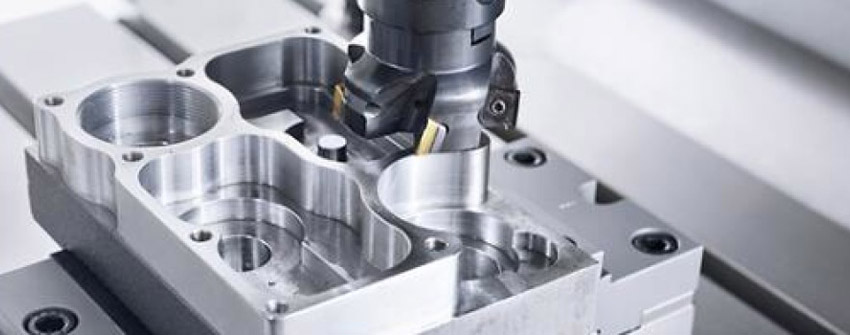
Custom CNC machining offers significantly greater engineering freedom. Designers can create highly complex geometries, optimize structural performance, and integrate multiple functions into a single component. This flexibility is particularly valuable in aerospace, robotics, and medical industries where performance optimization is essential.
Advanced CNC machining technologies such as 5-axis machining further expand the possibilities for custom part production by enabling highly complex shapes and tighter tolerances.
Lead Time and Production Efficiency
Standard manufacturing generally provides faster lead times because production systems are already established. Manufacturers often keep raw materials, tooling, and finished components readily available, allowing rapid delivery for customers.
This is especially beneficial for maintenance operations, high-volume manufacturing, and industries where equipment downtime must be minimized.
Custom manufacturing usually requires additional production preparation. CAD models must be reviewed, machining programs developed, fixtures prepared, and prototypes tested before full production begins. These additional steps naturally increase lead time.
However, recent advances in digital manufacturing, automated programming, and simulation software are helping reduce the production time for custom CNC machined parts. Modern smart factories can now transition between different custom production jobs much more efficiently than traditional manufacturing systems.
Precision and Quality Requirements
Both standard and custom CNC machining can achieve excellent precision, but the level of quality control often differs depending on the application.
Standard parts are manufactured according to established industry tolerances and specifications. Since production processes are highly repeatable, quality control procedures are generally streamlined and efficient.
Custom manufacturing frequently requires tighter tolerances and more advanced inspection methods. Components used in aerospace, medical devices, and semiconductor equipment often demand extremely high dimensional accuracy and surface quality.
To achieve these requirements, manufacturers may use advanced metrology systems such as coordinate measuring machines (CMM), laser scanning equipment, and non-contact inspection technologies.
Material Selection in Standard and Custom Manufacturing
Material selection also varies significantly between the two manufacturing approaches.
Standard CNC machined parts are typically produced using commonly available materials such as aluminum, carbon steel, stainless steel, brass, and engineering plastics. These materials are cost-effective and easy to source.
Custom manufacturing allows engineers to select specialized materials based on specific performance requirements. Titanium alloys, Inconel, high-temperature materials, advanced composites, and medical-grade metals are often used for custom CNC machined components.
This flexibility enables manufacturers to optimize parts for strength, corrosion resistance, thermal stability, wear resistance, or lightweight performance.
The Future of CNC Manufacturing
As manufacturing technology continues to evolve, the distinction between standard and custom manufacturing is gradually becoming less pronounced.
Automation, AI-driven programming, digital manufacturing platforms, and flexible CNC production systems are making custom machining faster and more affordable than ever before. At the same time, digital supply chains and on-demand manufacturing are improving access to standard components worldwide.
Future manufacturing trends are expected to focus on increased flexibility, shorter lead times, intelligent automation, and highly adaptive production systems capable of efficiently handling both standard and custom machining projects.
Conclusion
Standard and custom manufacturing each offer important advantages in CNC machining. Standard manufacturing provides cost efficiency, rapid production, and easy interchangeability, making it ideal for general industrial applications and high-volume production environments.
Custom manufacturing, on the other hand, delivers greater design flexibility, specialized performance, and advanced precision for industries that demand highly engineered solutions.
Choosing the right manufacturing method depends on factors such as production volume, budget, performance requirements, lead time, and engineering complexity. In many cases, manufacturers combine both approaches to achieve the optimal balance between cost, efficiency, and product performance.
As CNC machining technology continues advancing, both standard and custom manufacturing will remain essential parts of modern industrial production, supporting innovation and high-precision manufacturing across a wide range of industries.