


In modern manufacturing, time and cost efficiency are just as critical as part accuracy. As component designs become more complex and tolerance requirements tighten, traditional machining methods are not always the most practical solution. Precision EDM (Electrical Discharge Machining) has emerged as a highly effective process for producing complex, high-accuracy pats while significantly reducing overall production time and cost.
EDM machining is not simply a niche process—it is a strategic manufacturing tool when precision and efficiency matter.
Enabling Complex Geometry Without Additional Operations
One of the biggest advantages of precision EDM machining is its ability to produce intricate geometries that are difficult or impossible to achieve with conventional cutting methods. Sharp internal corners, deep narrow slots, micro features, and complex cavities can all be machined without tool deflection or excessive setup changes.
By eliminating the need for multiple secondary operations, EDM reduces overall machining steps. Fewer operations mean shorter production cycles, lower labor costs, and reduced risk of dimensional errors caused by repeated setups.
Maintaining Accuracy Without Tool Wear Concerns
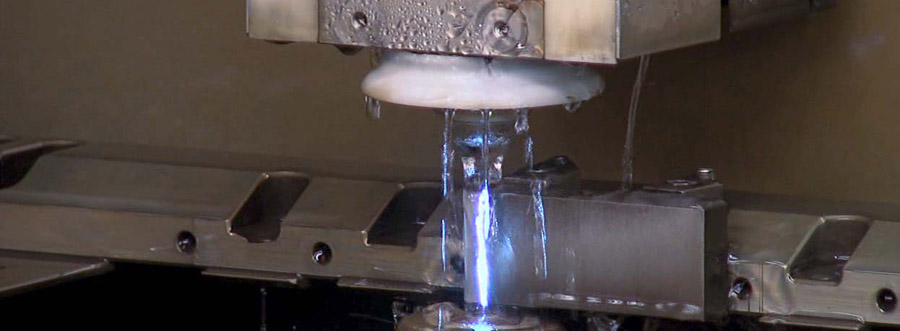
Unlike traditional machining, EDM is a non-contact process. Material removal occurs through controlled electrical discharges rather than mechanical cutting forces. This eliminates issues related to tool pressure, vibration, and deformation of delicate features.
Because there is no direct tool-to-part contact, tool wear has far less impact on dimensional accuracy. Precision EDM machining delivers consistent results even for high-tolerance parts, reducing scrap rates and minimizing the need for rework—both of which contribute to lower overall manufacturing costs.
Reducing Setup Time for Hard and Exotic Materials
Hard materials such as hardened steel, carbide, titanium, and exotic alloys often require specialized tooling and slower cutting speeds when machined conventionally. EDM machining, however, is largely unaffected by material hardness as long as the material is electrically conductive.
This allows manufacturers to machine hardened components directly, without the need for soft machining followed by heat treatment and finishing. Eliminating these intermediate steps saves significant time, simplifies production planning, and lowers total project cost.
Improving Lead Times for High-Precision Components
For parts with tight tolerances or complex profiles, achieving final dimensions through conventional machining often requires multiple trial-and-error adjustments. Precision EDM provides excellent repeatability and control, allowing manufacturers to reach final specifications more quickly.
Shorter lead times are especially valuable for tooling, molds, dies, and critical production components where delays can impact entire production schedules. Faster turnaround translates directly into cost savings and improved operational efficiency.
Minimizing Scrap and Material Waste
Precision EDM machining offers exceptional control over material removal, which is especially important when working with expensive materials. The ability to remove material precisely where needed reduces excess waste and minimizes the risk of scrapping high-value parts.
Lower scrap rates not only reduce material costs but also help stabilize production timelines, making EDM an economically sound choice for precision-critical applications.
Supporting Automation and Unattended Operation
Modern EDM machines are highly compatible with automation. Many processes can run unattended for extended periods, including overnight operation. This significantly increases machine utilization without increasing labor costs.
By maximizing productive machine hours, manufacturers can produce more parts in less time, further improving cost efficiency—especially for high-precision or repeat production runs.
Ideal for Tooling, Mold, and Precision Component Manufacturing
Precision EDM machining is widely used in mold making, die manufacturing, and high-precision tooling applications. These components often require complex geometries, hardened materials, and tight tolerances—all areas where EDM excels.
By producing accurate tooling from the start, EDM helps prevent downstream production issues, saving time and cost throughout the entire manufacturing lifecycle.
When Precision EDM Makes the Most Sense
While EDM is not always the fastest option for simple geometries, it becomes highly cost-effective when precision, complexity, or material hardness are critical factors. Choosing EDM at the right stage of a project can eliminate unnecessary processes, reduce errors, and accelerate time to market.
Working with an experienced EDM machining partner ensures that the process is applied strategically, maximizing both technical and economic benefits.
Conclusion
Precision EDM machining plays a key role in saving time and money by simplifying complex manufacturing challenges. Through reduced setups, improved accuracy, minimized scrap, and efficient processing of hard materials, EDM offers a practical solution for high-precision applications.
When used strategically, precision EDM is not just a machining method—it is a cost-saving and time-efficient manufacturing advantage.