
Stainless steel is widely used for CNC machined components because of its strength, corrosion resistance, durability, and relatively stable performance in demanding environments. However, machining stainless steel does not always produce the surface condition required for the final application.
CNC milling, turning, drilling, and grinding can leave tool marks, machining lines, burrs, microscopic surface irregularities, and other surface imperfections. For applications where cleanliness, friction, corrosion resistance, sealing, or appearance is important, additional polishing may be required.
Polishing stainless steel CNC parts is therefore not simply an aesthetic process. Depending on the polishing method and the application, it can improve surface smoothness, reduce surface roughness, enhance cleanability, remove minor surface imperfections, and prepare the part for subsequent surface treatments.
This article explains why stainless steel CNC parts are polished and what benefits polishing can provide beyond appearance.
What Is Stainless Steel Polishing?
Stainless steel polishing is a surface-finishing process used to improve the condition of a stainless steel surface after machining or other manufacturing operations.
Mechanical polishing generally uses abrasive materials to progressively remove surface irregularities. The process may involve coarse grinding followed by finer abrasive steps until the required surface finish is achieved.
Electropolishing uses an electrochemical process instead of mechanical abrasion. Material is selectively removed from the metal surface, with microscopic high points generally removed more rapidly than recessed areas. This can produce a smoother and more uniform surface while also improving surface cleanliness.
The appropriate process depends on the material grade, part geometry, required surface roughness, dimensional requirements, appearance, and end-use environment.
Why Do CNC Machined Stainless Steel Parts Need Polishing?
CNC machining provides excellent dimensional accuracy, but the machining process inevitably produces a characteristic surface texture.
Cutting tools leave tool marks and feed lines on machined surfaces. Depending on the cutting parameters, tool geometry, material, and machining strategy, the resulting surface roughness may be unsuitable for the final application.
Polishing can reduce these surface irregularities and produce a more controlled surface condition.
For a decorative component, this may primarily be an appearance requirement. For an engineering component, however, the reason may be functional.
A smoother surface can be easier to clean, may reduce the retention of contaminants, and can be beneficial for components exposed to repeated contact, sliding, sealing, or controlled fluid flow.
1. Improved Surface Smoothness and Lower Roughness
One of the most direct benefits of polishing is the reduction of surface roughness.
A CNC-machined surface contains microscopic peaks and valleys. The extent of these irregularities depends on the machining process and specified cutting parameters.
Polishing reduces these irregularities by removing material from the surface. Finer polishing processes can produce significantly smoother surfaces than conventional machining alone.
This can be important when a component must meet a specified Ra value or another surface-finish requirement.
However, polishing should not be treated as a universal solution for achieving any required surface roughness. The achievable finish depends on the stainless steel grade, initial surface condition, polishing method, part geometry, and process control.
For precision components, the required surface roughness should therefore be specified clearly on the engineering drawing or technical documentation.
2. Better Cleanability
Surface texture can affect how easily contaminants are removed from a component.
Rougher surfaces contain more microscopic valleys and irregularities where particles, residues, or process contaminants can accumulate. A smoother surface is generally easier to clean because there are fewer surface irregularities capable of retaining contaminants.
This is particularly relevant for stainless steel components used in food-processing equipment, pharmaceutical machinery, laboratory equipment, medical-related equipment, and other applications where cleanliness is important.
In these applications, polishing is often considered as part of a broader surface-finish strategy rather than simply a cosmetic treatment.
The actual cleaning performance, however, also depends on the design, material, surface condition, cleaning procedure, and operating environment.
3. Reduced Risk of Contaminant Retention
A highly irregular surface can provide more opportunities for foreign particles and residues to remain attached to the component.
A smoother stainless steel surface can reduce the tendency of contaminants to become trapped in surface irregularities. This is one reason why controlled surface finishes are often required in equipment where hygiene and contamination control are important.
For example, components used in pharmaceutical or food-processing equipment may require carefully controlled surface finishes in addition to appropriate material grades and cleaning procedures.
Polishing alone does not make a component hygienic or corrosion-proof. Instead, it is one part of a complete material, design, manufacturing, and cleaning system.
4. Improved Corrosion Performance in Certain Applications
Stainless steel’s corrosion resistance is primarily associated with its passive chromium-rich oxide film.
Machining, grinding, handling, and other manufacturing operations can leave contaminants or embedded particles on the surface. Surface finishing can help remove certain types of surface contamination and improve the condition of the metal surface.
Electropolishing can be particularly useful when both a smooth surface and a high level of surface cleanliness are required.
However, it is important to distinguish polishing from passivation.
Polishing primarily changes the physical condition of the surface. Passivation is a chemical treatment intended to promote or restore a more stable passive surface condition by removing free iron and other contaminants under controlled processing conditions.
For demanding stainless steel components, polishing and passivation may therefore be used separately or in combination, depending on the application and applicable specifications.
5. Better Wear and Friction Characteristics
Surface finish can influence the contact behavior between mating components.
When two surfaces slide against each other, pronounced surface irregularities can increase mechanical interaction between the surfaces. Depending on the material pair, lubrication, load, speed, and operating conditions, reducing surface roughness can help achieve more consistent sliding behavior.
This can be relevant for stainless steel shafts, sleeves, guides, precision mechanical components, and other parts involving contact or movement.
However, a smoother surface does not automatically mean lower friction in every application. Friction and wear depend on many variables, including material combination, surface hardness, lubrication, contact pressure, temperature, and operating speed.
For this reason, surface polishing should be selected according to the actual functional requirements of the component.
6. Improved Sealing and Contact Surfaces
Certain CNC machined stainless steel parts contain sealing surfaces, mating faces, or precision interfaces.
Excessive surface irregularities can interfere with the consistency of contact between mating surfaces. A properly controlled surface finish can help create a more uniform interface and may support sealing performance when combined with an appropriate seal design.
For components such as valve parts, fluid-handling components, fittings, and precision mechanical assemblies, surface finish can therefore be a functional specification rather than a cosmetic preference.
The required finish should be determined according to the seal type, pressure, fluid, dimensional tolerance, and manufacturer’s design requirements.
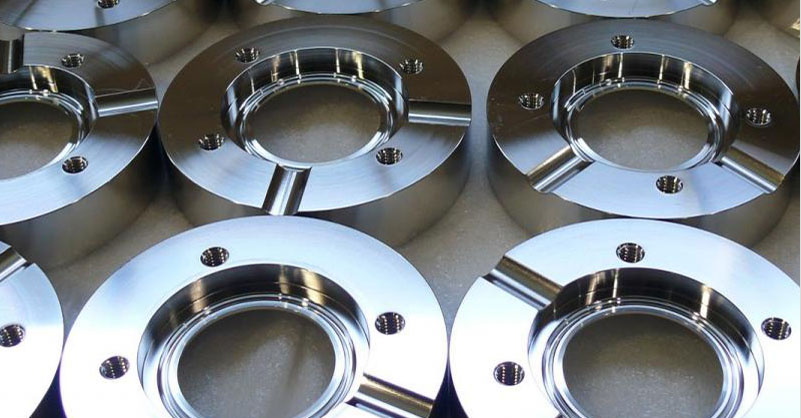
7. Removal of Minor Machining Marks and Surface Defects
CNC machining can produce visible tool marks, scratches, burrs, and other minor surface imperfections.
Polishing can improve the visual uniformity of the component and reduce or remove certain superficial machining marks.
This is particularly useful for parts with visible surfaces or components used in consumer products, laboratory equipment, architectural hardware, and other applications where appearance is part of the product specification.
Nevertheless, polishing should not be expected to correct major machining defects.
Deep scratches, dimensional errors, excessive tool marks, chatter, deformation, or incorrect machining features generally need to be addressed through the machining process itself. Polishing should be considered a finishing operation, not a substitute for proper CNC machining.
8. More Consistent Appearance
Stainless steel can have different appearances depending on the machining process and surface treatment.
A machined surface may show visible tool paths, while grinding, brushing, bead blasting, and polishing create different textures and levels of reflectivity.
Polishing can provide a more uniform appearance and, depending on the process, a bright or mirror-like surface.
For components where visual consistency matters, the polishing process should be clearly defined. Simply specifying “polished stainless steel” may not provide enough information for consistent production.
The customer may need to specify the required surface roughness, polishing level, appearance, or reference sample.
Mechanical Polishing vs. Electropolishing
Mechanical polishing and electropolishing are not interchangeable processes.
Mechanical polishing removes material through physical abrasion. It can be used to progressively improve the surface finish and is commonly selected when a particular visual appearance or surface roughness is required.
Electropolishing removes material electrochemically. Because microscopic high points can be preferentially removed, the process can produce a smoother and more uniform surface while also improving surface cleanliness.
The choice depends on the application.
If the main requirement is a bright decorative finish or controlled mechanical surface appearance, mechanical polishing may be appropriate.
If the application places greater emphasis on surface smoothness, cleanliness, reduced surface irregularities, and corrosion-related performance, electropolishing may be considered.
In some applications, a component may also undergo polishing followed by passivation or another treatment.
Polishing Can Affect Part Dimensions
For precision CNC components, one important consideration is material removal.
Although polishing generally removes less material than rough machining, it is still a material-removal process. The amount removed depends on the polishing method, starting surface condition, processing time, abrasive sequence, and required finish.
This becomes especially important for components with tight dimensional tolerances.
If a critical diameter, flatness, thickness, or mating dimension must remain within a narrow tolerance after polishing, the machining and finishing processes should be considered together.
For critical parts, manufacturers may intentionally leave an appropriate finishing allowance during CNC machining and complete the final dimension through a controlled finishing process.
How to Specify Polishing for CNC Stainless Steel Parts
A drawing or purchase specification should provide enough information for the manufacturer to understand the required final surface condition.
Instead of simply writing “polished stainless steel,” it is often better to specify the material grade, required surface roughness, critical dimensions, polishing requirements, and any applicable standards.
For example, a drawing may specify a stainless steel grade such as 304 or 316L, a target surface roughness such as Ra 0.8 μm, and additional requirements for passivation or electropolishing where applicable.
The exact specification should be selected according to the component’s function rather than simply choosing the lowest possible roughness value.
An unnecessarily fine surface finish can increase processing time and cost without providing a meaningful functional benefit.
When Should Stainless Steel CNC Parts Be Polished?
Not every stainless steel CNC component needs polishing.
Standard CNC machining may be sufficient when the component is hidden inside an assembly, has relatively low surface-finish requirements, or does not require special cleanliness or appearance.
Polishing becomes more relevant when the component requires:
- A controlled low surface roughness
- A smooth or reflective appearance
- High cleanliness
- Reduced surface irregularities
- Controlled contact or sliding surfaces
- Specific sealing or mating characteristics
- Improved cleanability
- Preparation for certain subsequent finishing processes
The correct approach is to define the functional requirement first and then select the appropriate surface-finishing process.
How to Achieve a Better Polished Finish
A high-quality polished surface begins before the polishing operation.
The CNC machining process should produce a consistent starting surface. Appropriate cutting tools, cutting parameters, workholding, coolant management, and chip evacuation can help minimize unnecessary scratches, burrs, and tool marks.
The stainless steel grade also matters. Different grades and material conditions can respond differently to machining and polishing.
During polishing, the abrasive sequence should be controlled carefully. Coarse abrasives may be required initially to remove machining marks, followed by progressively finer abrasives to achieve the desired finish.
For precision components, the manufacturer should also control dimensional changes throughout the finishing process and perform final inspection after polishing.
Conclusion
Polishing stainless steel CNC parts is much more than a way to make components look shiny.
A properly controlled polishing process can improve surface smoothness, reduce surface roughness, enhance cleanability, reduce the retention of contaminants, improve the consistency of contact surfaces, and provide the surface condition required by demanding industrial applications.
For certain applications, mechanical polishing, electropolishing, and passivation may be used individually or in combination. The appropriate choice depends on the stainless steel grade, part geometry, dimensional tolerances, surface roughness requirements, operating environment, and final application.
For precision CNC machined parts, the goal should not simply be to achieve the smoothest possible surface. Instead, the surface finish should be selected according to what the component actually needs to accomplish.
In other words, polishing should be treated as a functional manufacturing decision—not simply a cosmetic finishing step.