


In modern CNC machining, standard cutting tools can handle many general operations. However, when parts become more complex, tolerances become tighter, or production efficiency becomes critical, custom tooling often becomes the key to achieving reliable results.
Custom tooling refers to specially designed cutting tools, holders, or machining accessories developed for a specific part geometry or manufacturing process. By tailoring tools to the exact machining requirements, manufacturers can improve cutting performance, reduce cycle time, and maintain consistent part quality.
For industries such as aerospace, robotics, medical devices, and precision industrial equipment, custom tooling is often an essential part of advanced CNC manufacturing.
What Is Custom Tooling in CNC Machining?
Custom tooling involves designing and manufacturing tools that are specifically optimized for a particular machining application. Unlike standard off-the-shelf cutters, custom tools are engineered to match the material properties, feature geometry, and production workflow of the component being machined.
These tools may include specially designed end mills, form cutters, step drills, reamers, or multi-function tools capable of performing several operations in a single pass. In many cases, custom tooling is developed to machine unique profiles, deep cavities, tight internal corners, or complex surface geometries that standard tools cannot efficiently produce.
Because the tool geometry is optimized for the specific task, custom tooling can significantly enhance both precision and productivity.
Advantages of Custom Tooling in CNC Machining
1. Optimizing Throughput: Reducing Active and Passive Cycles
One of the most immediate benefits of bespoke tooling is the consolidation of manufacturing steps. Rather than using multiple standard tools for separate features, custom solutions allow for multifunctional integration—combining several operations into a single tool path.
2. Extending Tool Life via Material Science and Thermal Management
The lifespan of a tool is a direct reflection of its ROI. Custom tools are frequently engineered with application-specific substrates and high-performance surface treatments that are far superior to “general purpose” alternatives.
3. Strengthening Process Reliability and Adaptive Flexibility
Fail-Safe Manufacturing and Error Prevention
Custom tooling serves as an inherent quality control mechanism. By incorporating “Poka-yoke” (error-proofing) elements—such as unique keyed inserts or specialized tool holders—manufacturers can eliminate the risk of operator error. In high-stakes sectors like defense and aerospace, where a single mistake can lead to catastrophic failure, this built-in reliability is indispensable.
High-Performance Tailoring for Niche Industries
Every bespoke tool is the result of a rigorous analysis of the part’s geometry and metallurgical properties.
This level of customization doesn’t just improve quality; it provides the operational flexibility needed to adapt to evolving production demands. When a design changes, a custom-tooled setup can often be adjusted more precisely than a generic one, maintaining peak performance across the entire product lifecycle.
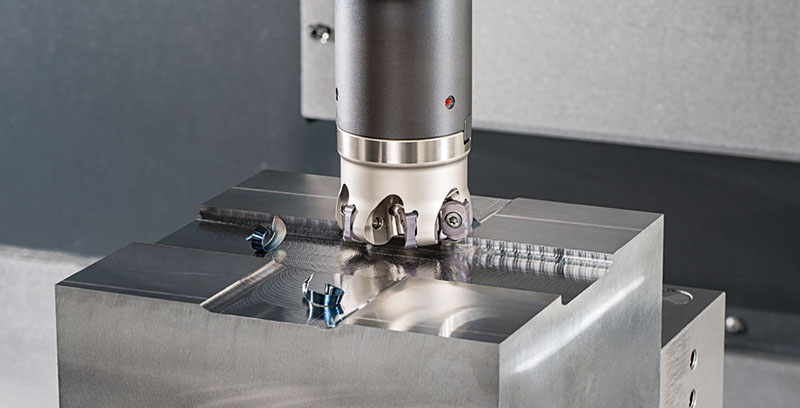
Navigating the Challenges of Custom Tooling: A Strategic Perspective
While the advantages of bespoke tooling are undeniable, the path to implementation involves specific technical and financial hurdles. Understanding how to navigate these challenges is key to unlocking long-term manufacturing excellence.
1. Bridging the Design Complexity and Development Gap
Developing a custom tool is not a simple purchase; it is a highly technical collaboration. The process requires a synergy between design engineers, CNC specialists, and tool manufacturers to ensure the hardware aligns perfectly with the workpiece’s unique characteristics.
The Challenge: Every tool must be meticulously calibrated for specific feed rates, cutting speeds, and complex part geometries. This deep optimization naturally extends the initial development phase compared to ordering a standard catalog tool.
The Solution: Experienced professionals view this extended timeline as a “front-loading” effort. The time invested in the design phase is recovered tenfold during production through superior part quality and the elimination of trial-and-error on the shop floor.
2. Balancing High Capital Expenditure (CapEx) with Lifecycle ROI
The most common barrier to adopting custom tooling is the initial price tag. Because these tools utilize premium materials and require specialized engineering labor, the upfront cost is significantly higher than that of off-the-shelf alternatives.
The Challenge: High-performance alloys and complex geometries drive up the initial purchase price, which can be daunting for project managers focused purely on immediate budgets.
The Solution: The true value of custom tooling is found in its amortization over the product lifecycle. In high-precision, high-volume industries like aerospace and medical manufacturing, the investment is recouped through:
- Reduced Cycle Times: Shaving seconds off every pass adds up to massive savings across thousands of parts.
- Drastic Reduction in Tool Changes: Longer-lasting tools mean less machine downtime and lower labor costs.
- Waste Minimization: Higher precision leads to fewer scrapped parts, protecting your expensive raw material stock.
Conclusion
Custom tooling is a powerful strategy for improving precision, efficiency, and manufacturing reliability in CNC machining. By tailoring tool geometry to the specific requirements of a component, manufacturers can reduce cycle times, improve surface finishes, and maintain consistent dimensional accuracy.
As product designs become more complex and industries demand higher performance standards, custom tooling will continue to play an increasingly important role in advanced machining operations. For manufacturers seeking to optimize both productivity and part quality, investing in custom tooling can provide a significant competitive advantage.