

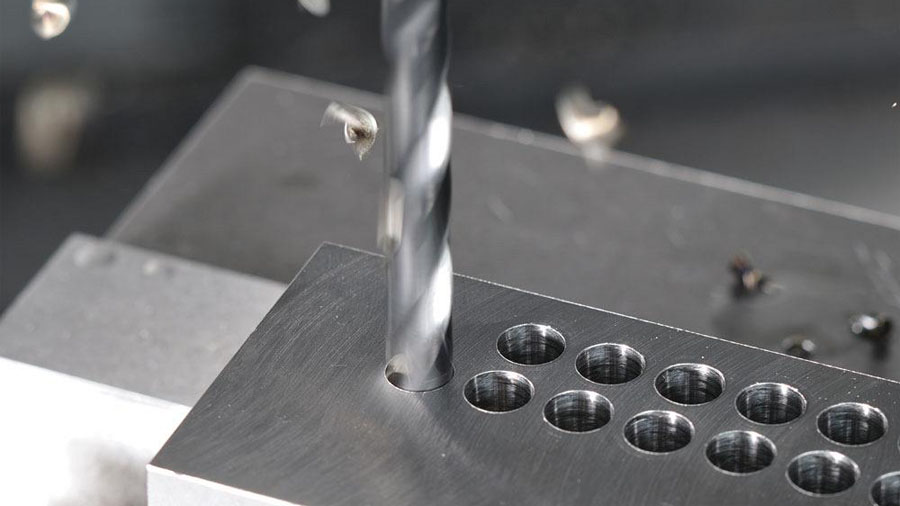
Hole machining is one of the most common operations in CNC manufacturing. From simple mounting holes to precision fluid channels, holes exist in almost every machined component. While drilling may appear straightforward, not all holes are created equal. Certain hole types present significant challenges in terms of tool wear, chip evacuation, dimensional accuracy, and surface finish.
Understanding which holes are the most difficult to machine—and why—can help engineers optimize part design, reduce manufacturing risks, and control production costs.
Why Hole Machining Becomes Challenging
The difficulty of machining a hole is rarely defined by diameter alone. Instead, it is influenced by a combination of factors, including hole depth, tolerance requirements, material properties, internal geometry, and surface finish expectations.
When multiple complexity factors overlap—such as deep depth, small diameter, and tight tolerance—the machining process becomes exponentially more difficult. Tool deflection increases, heat accumulation rises, and chip removal becomes less efficient. These conditions not only affect dimensional accuracy but also shorten tool life and increase the risk of scrap.
For this reason, hole machining is often a critical focus area in Design for Manufacturability (DFM) reviews.
Deep Holes: A Primary Machining Challenge
Among all hole types, deep holes are widely considered the most difficult to machine. A hole is typically classified as “deep” when its depth exceeds 10 times its diameter (10×D), though challenges can begin even earlier depending on material and tooling.
The deeper the hole, the more difficult it becomes to maintain straightness and concentricity. Tool deflection is a major concern, especially in softer tools or harder materials such as titanium or stainless steel. Even slight deviation at the entry point can lead to significant positional error at full depth.
Chip evacuation is another critical issue. In shallow holes, chips are easily expelled. In deep cavities, however, chips tend to pack inside the hole, leading to tool breakage, surface scratching, or heat buildup. High-pressure coolant systems or peck drilling cycles are often required to manage this risk.
Surface finish also degrades with depth. Vibration and limited chip flow can leave irregular tool marks, making secondary finishing processes necessary.
Small Diameter Holes and Micro-Drilling Risks
Small holes—particularly those under 1 mm in diameter—introduce a different set of machining challenges. Micro-drills are extremely fragile, making them highly susceptible to breakage from vibration, misalignment, or excessive feed rates.
Because of their limited rigidity, maintaining positional accuracy is difficult. Even minor spindle runout can cause tool failure. Additionally, coolant delivery becomes less effective at such small scales, increasing heat concentration at the cutting edge.
Inspection is also more complex. Verifying diameter, roundness, and surface integrity inside micro-holes often requires specialized optical or air-gauge measurement systems.
Blind Holes and Bottom Geometry Control
Blind holes—holes that do not pass completely through the material—are deceptively difficult. Unlike through-holes, blind holes trap chips at the bottom, increasing the risk of recutting and tool wear.
Controlling bottom geometry is another challenge. Many blind holes require flat bottoms, radiused corners, or specific depth tolerances. Standard drill tips naturally create conical bottoms, meaning secondary operations such as flat-bottom drills or end milling may be required.
Depth accuracy is critical in applications involving fastener engagement, sealing surfaces, or press-fit assemblies. Even slight over-cutting can compromise part functionality.
Cross Holes and Intersecting Features
Cross holes—where two or more holes intersect—create interrupted cutting conditions. As the drill breaks into an existing cavity, cutting forces suddenly change. This can cause tool chatter, edge chipping, or dimensional inaccuracy at the intersection zone.
Material burr formation is also more pronounced at breakthrough points. These burrs can obstruct fluid flow, interfere with assembly, or require manual deburring—adding labor cost and variability.
Maintaining alignment between intersecting holes requires precise fixturing and multi-axis positioning accuracy.
Tight Tolerance and High Aspect Ratio Holes
Tolerance requirements often define machining difficulty more than geometry alone. Holes requiring micron-level accuracy in diameter, cylindricity, and positional tolerance demand advanced tooling strategies.
Reaming, honing, or precision boring may be required after drilling to achieve final dimensions. Each added process step increases cycle time and cost.
High aspect ratio holes—deep and narrow simultaneously—represent the peak of machining complexity. These features combine chip evacuation challenges, tool deflection risk, and inspection difficulty into a single operation.
The Role of Material in Hole Machining Difficulty
Material selection significantly impacts hole machinability. Aluminum allows relatively easy chip evacuation and low cutting forces, making deep or small holes more manageable.
In contrast, materials such as titanium, Inconel, or hardened steels generate higher heat and cutting resistance. Chips may become stringy or adhesive, increasing the likelihood of built-up edge (BUE) and tool wear.
As a result, identical hole geometries can vary dramatically in difficulty depending on the workpiece alloy.
Inspection and Quality Assurance Considerations
Difficult holes are also difficult to inspect. Internal geometries limit direct measurement access, requiring specialized metrology solutions such as:
- Bore gauges
- Air gauges
- Coordinate Measuring Machines (CMM)
- Industrial CT scanning (for complex internal channels)
Inspection capability must be considered early in process planning. Without reliable measurement, maintaining consistent quality becomes nearly impossible.
Designing Holes for Manufacturability
Engineers can reduce machining risk by optimizing hole design during development. Limiting depth-to-diameter ratios, avoiding unnecessary blind features, and standardizing hole sizes can significantly improve manufacturability.
Where deep holes are unavoidable, adding relief grooves or specifying through-hole designs can ease chip evacuation and reduce tooling stress.
Collaborating with machining partners during the design phase often leads to cost savings and improved production reliability.
Conclusion
While hole machining is a fundamental CNC operation, certain hole types push the limits of tooling, process control, and inspection capability. Deep holes, micro-holes, blind holes, and intersecting geometries each introduce unique manufacturing risks.
By understanding these challenges—and designing with manufacturability in mind—engineers and procurement teams can reduce production delays, extend tool life, and ensure consistent part quality.
In precision machining, even the simplest feature—a hole—can become the most technically demanding element of a component when performance expectations are high.