

As manufacturing requirements continue to evolve, high-performance metal components are playing an increasingly critical role across industries such as aerospace, automotive, medical devices, energy, and industrial equipment. These components are often required to operate under extreme mechanical loads, tight assembly constraints, and demanding environmental conditions. To meet these expectations, manufacturers must go beyond conventional machining methods and adopt a combined approach that integrates precision CNC machining and precision grinding.
This combination allows manufacturers to achieve the dimensional accuracy, surface integrity, and functional reliability that high-performance applications demand.
Defining High-Performance Metal Components
High-performance metal components are characterized not only by their material properties, but also by the precision with which they are manufactured. These parts often feature tight tolerances, critical mating surfaces, and specific surface finish requirements that directly influence performance factors such as fatigue resistance, wear behavior, sealing efficiency, and thermal stability.
Even minor dimensional deviations or surface imperfections can lead to premature failure, increased friction, or assembly issues. As a result, manufacturing processes must be carefully selected and controlled to ensure consistent quality throughout the entire production cycle.
The Foundation: Precision CNC Machining
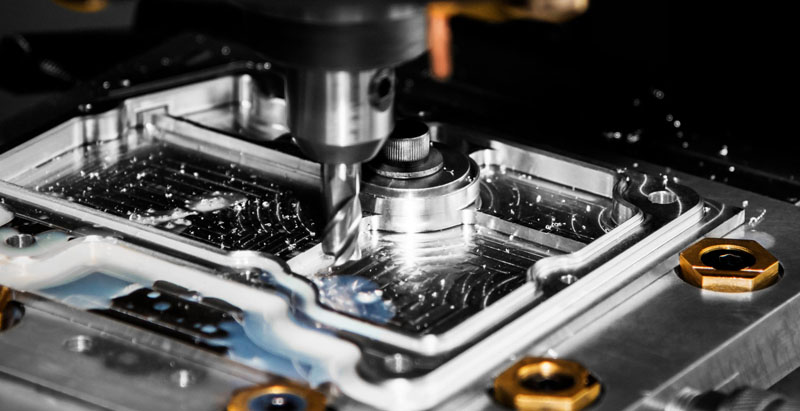
Precision CNC machining forms the foundation of most high-performance metal components. Advanced CNC milling and turning centers allow manufacturers to create complex geometries with excellent repeatability and process stability. Multi-axis machining further enables the production of intricate features, tight positional tolerances, and complex contours within a single setup.
CNC machining is highly effective for bulk material removal, shape definition, and feature creation. However, even with modern tooling and optimized parameters, conventional machining alone may struggle to consistently achieve ultra-tight tolerances or extremely fine surface finishes on certain functional surfaces. Tool deflection, cutting forces, and thermal effects can all introduce small variations that become significant in high-performance applications.
This is where precision grinding becomes essential.
The Role of Precision Grinding in High-Accuracy Manufacturing
Precision grinding is an abrasive machining process designed to remove very small amounts of material with exceptional control. By using precisely dressed grinding wheels and tightly controlled parameters, manufacturers can achieve micron-level dimensional accuracy and superior surface finishes.
Grinding is particularly effective for finishing critical features such as bearing seats, sealing surfaces, cylindrical shafts, flat mating faces, and components that require high concentricity or parallelism. Because material removal occurs at a much finer scale than traditional cutting processes, grinding enables tighter control over final dimensions and surface texture.
Additionally, precision grinding helps minimize residual stresses and surface damage, preserving the mechanical integrity of high-performance materials. This is especially important for components subjected to cyclic loading or long service life requirements.
Integrating Machining and Grinding for Optimal Results
In high-performance manufacturing, precision grinding is most effective when integrated into a well-planned CNC machining workflow. Rather than treating grinding as a corrective step, it is strategically applied as a finishing operation that complements earlier machining stages.
A typical integrated process includes:
Initial CNC machining operations establish the primary geometry of the component, removing bulk material and forming features close to nominal dimensions. This stage prioritizes efficiency and material removal while maintaining sufficient allowance for final finishing.
Precision grinding then refines selected surfaces to their final dimensions and finish requirements. By focusing only on critical areas, manufacturers optimize production efficiency while achieving the required precision where it matters most.
Comprehensive inspection follows, using precision measurement equipment to verify dimensional accuracy, surface finish, and geometric relationships. This ensures that the combined process meets design specifications consistently.
This integrated approach allows manufacturers to leverage the strengths of both machining and grinding, resulting in components that meet demanding performance criteria without excessive processing steps.
Material Considerations and Machinability
High-performance components are often produced from a wide range of metals, each presenting unique machining and grinding challenges. Common materials include aluminum alloys, carbon and alloy steels, stainless steels, tool steels, titanium alloys, and nickel-based superalloys.
Harder and higher-strength materials may be difficult to machine to final tolerances using cutting tools alone. Precision grinding provides better control when finishing these materials, especially where heat generation or tool wear could otherwise compromise dimensional stability.
Selecting appropriate grinding wheels, machining tools, and process parameters is essential to maintain material integrity and avoid thermal damage or micro-cracking. Experience with both machining and grinding processes enables manufacturers to optimize workflows for each material type.
Applications Requiring High Precision and Surface Integrity
The combination of precision machining and grinding is widely used in industries where component performance directly impacts safety, reliability, or product lifespan.
In aerospace applications, components such as shafts, pins, and structural interfaces require tight tolerances and excellent surface integrity to withstand vibration, fatigue, and extreme temperature variations.
Medical device manufacturing relies on precision grinding to achieve smooth, consistent surfaces for implants, surgical instruments, and motion-critical components, where surface quality directly affects functionality and biocompatibility.
Automotive and motorsport components benefit from grinding-finished bearing surfaces and precision interfaces that reduce friction and enhance durability under high load conditions.
In industrial equipment and automation systems, precision-finished components ensure accurate motion control, reduced wear, and long-term operational stability.
Quality Control and Process Stability
Achieving high performance in metal components depends not only on equipment capability, but also on process control and inspection. Precision machining and grinding operations must be supported by robust quality control practices to ensure repeatability and compliance.
Dimensional inspections, surface roughness measurements, and geometric verification are integral parts of the manufacturing process. Early detection of deviations allows corrective actions to be implemented before issues propagate downstream.
Consistent quality control helps reduce scrap, minimize rework, and improve overall production efficiency, particularly in applications where tolerances are tight and performance margins are limited.
Manufacturing Benefits of an Integrated Approach
By combining precision CNC machining and grinding, manufacturers gain several key advantages. Dimensional accuracy and surface finish are improved without excessive reliance on secondary operations. Production consistency increases, supporting both prototype development and serial production.
Integrated workflows also reduce lead times by minimizing unnecessary process transitions and enabling better coordination between machining and finishing stages. For customers, this translates into more predictable delivery schedules and higher confidence in part performance.
Conclusion
High-performance metal components demand manufacturing solutions that balance efficiency, accuracy, and reliability. Precision CNC machining provides the flexibility and capability to create complex geometries, while precision grinding delivers the final dimensional control and surface quality required for demanding applications.
By integrating these processes into a unified manufacturing strategy, producers can achieve superior quality, improved consistency, and enhanced performance across a wide range of industries. Precision grinding and machining together form a critical foundation for modern high-performance metal component manufacturing.