


Magnetic properties are often overlooked in CNC machined components, yet they play a critical role in the performance, accuracy, and long-term reliability of many industrial products. Whether machining steel, stainless steel, or specialized alloys, magnetic behavior can influence assembly, sensor performance, tool wear, and contamination risks. Understanding how magnetism develops during machining—and why demagnetization services are essential—helps engineers ensure their parts meet functional requirements across demanding applications.
Why CNC Machined Parts Become Magnetized
Many materials commonly used in CNC machining—such as carbon steel, alloy steel, and some stainless steels—can acquire residual magnetism during manufacturing. This magnetization typically arises from several sources:
Mechanical Deformation
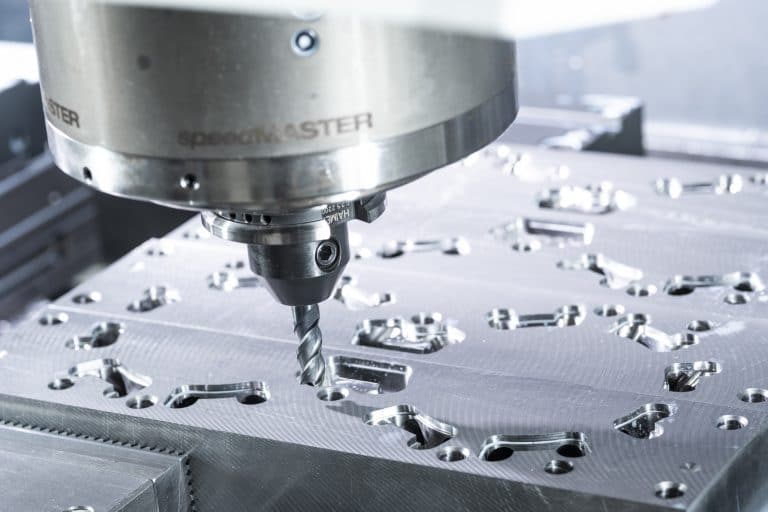
Plastic deformation during turning, milling, or grinding can align magnetic domains inside the metal. Materials like carbon steel or martensitic stainless steel are especially susceptible.
Steel: Steel, a common material in CNC machining, often exhibits magnetic properties after processing. This property can affect applications requiring non-magnetic properties, such as precision instruments and medical equipment.
Stainless Steel: Although stainless steel is generally considered a non-magnetic material, some alloys may exhibit magnetic characteristics after CNC machining. This can affect applications in the food processing and chemical industries where non-magnetic properties are crucial.
Ferroalloys: Ferroalloys such as Invar and iron-cobalt alloys retain their magnetism after machining due to their compositional characteristics. These alloys are widely used in precision instruments, where their ability to maintain dimensional stability under temperature changes is critical.
Aluminum Alloys: While aluminum itself is nonmagnetic, some alloys may exhibit slight magnetism due to the presence of impurities. These alloys are used in the aerospace and automotive industries and require demagnetization services to prevent interference with sensitive electronic systems.
Copper: Some copper alloys may develop weak magnetism during CNC machining, affecting their use in electronic devices. Nonmagnetic copper alloys are the preferred choice to ensure proper signal transmission and minimize electromagnetic interference.
Titanium Alloys: Although titanium is nonmagnetic, certain alloys may exhibit slight magnetism due to the presence of alloying elements. In applications such as aerospace and medical devices, nonmagnetic titanium alloys are crucial for compatibility with sensitive equipment such as MRI machines.
Tool Interaction
High-speed cutting tools generate friction, pressure, and localized heating, which can magnetize surfaces. Even the contact between tool and workpiece can induce weak magnetic fields over time.
Magnetic Workholding
Many workshops use magnetic chucks, fixtures, or lifting equipment. Prolonged exposure to magnetic fields naturally magnetizes the machined components.
Problems Caused by Residual Magnetism in Machined Parts
Particle Attraction & Contamination
Magnetized parts tend to attract metal chips, dust, or abrasive particles. This contamination can:
- scratch precision surfaces
- interfere with sliding mechanisms
- damage bearings or seals
- reduce product lifespan
For high-precision assemblies, even tiny metallic debris can cause serious functional failures.
Assembly and Alignment Issues
Residual magnetism can disrupt assembly work, especially when tight tolerances are required. Parts may cling to tools, misalign during fitting, or resist proper seating.
Interference with Sensors or Electronics
In industries such as robotics, medical devices, and instrumentation, magnetic fields may cause:
- false sensor readings
- signal interference
- malfunction of magnetic or inductive components
These issues are particularly critical in aerospace and automotive applications.
How Demagnetization Works
Demagnetization (or degaussing) reduces the magnetic field of a part to acceptable limits, typically below 2–5 Gauss, depending on industry standards.
The most common methods include:
AC Demagnetization
Alternating current reduces magnetic alignment and gradually returns domains to a neutral state. This is widely used for small and medium-sized components.
DC Impulse Demagnetization
High-power DC pulses demagnetize harder materials and thick sections more effectively. This is ideal for tool steel or large machined components.
Heat-Based Demagnetization
Heating a material above its Curie temperature eliminates magnetism, but this method is rarely used for machined parts due to its impact on material properties.
Best Practices to Reduce Magnetism During Machining
Engineers and machinists can minimize magnetism by implementing the following practices:
- Avoid using magnetic chucks for precision parts
- Use non-magnetic fixturing materials when possible
- Maintain sharp tools to reduce friction-induced magnetization
- Use proper coolant flow to control heat and deformation
- Inspect magnetism periodically during production
- Apply demagnetization immediately after machining
- Proactive control saves time and prevents defects in later processes.
Importance of Demagnetization Services in Quality Assurance
Demagnetization services ensure that machined components meet performance requirements in demanding environments. Their benefits include:
- improved assembly accuracy
- reduced particle contamination
- better compatibility with sensors and electronics
- improved weld quality
- longer service life for mechanical systems
- compliance with stringent industry standards
For companies offering CNC machining services, adding demagnetization demonstrates a commitment to high-level quality control.
Conclusion
While magnetism may seem like a minor detail in CNC machining, it has major implications for component performance, cleanliness, and functional reliability. As industries increasingly rely on precision parts and sensitive electronic systems, controlling magnetic properties becomes a vital quality requirement.
Understanding the causes of magnetization—and implementing effective demagnetization practices—ensures that CNC machined parts deliver consistent, reliable performance in real-world applications. Whether producing aerospace components, robotic assemblies, or high-precision mechanical parts, demagnetization remains a key step in achieving top-tier manufacturing excellence.