

Manufacturing is gradually shifting away from traditional mass production toward more flexible and customized production models. Many industries today require smaller production runs while handling a wide variety of part designs. This manufacturing approach is commonly known as low-volume, high-mix production.
CNC machining has become one of the most effective technologies for supporting this production model. With its flexibility, precision, and adaptability, CNC manufacturing allows companies to efficiently produce different parts in small quantities while maintaining consistent quality standards.
Understanding Low-Volume, High-Mix Manufacturing
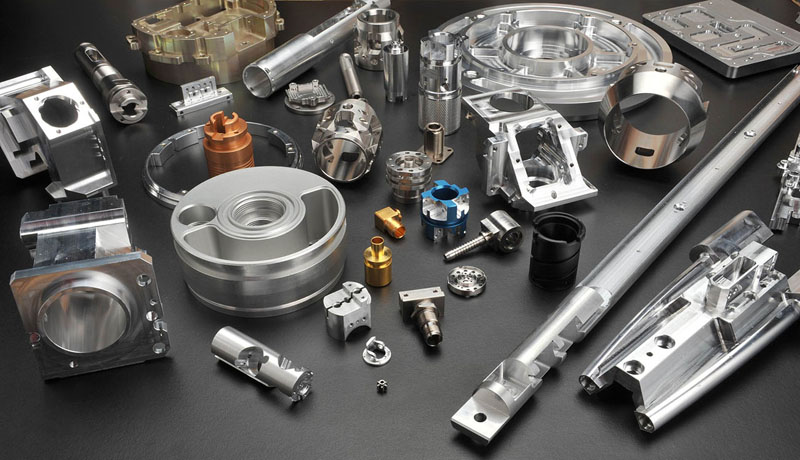
Low-volume, high-mix production refers to manufacturing environments where companies produce a wide range of part types but in relatively small quantities. Instead of producing thousands or millions of identical components, manufacturers may produce dozens or hundreds of different parts within the same production cycle.
This model is widely used in industries such as aerospace, medical devices, robotics, and specialized industrial equipment. In these sectors, product designs often change frequently, and customized components are common.
Compared with traditional mass production, this approach prioritizes flexibility, fast turnaround, and the ability to adapt to new product designs quickly. Small batch production also allows companies to test new products in the market while reducing the financial risks associated with large-scale manufacturing.
Why CNC Machining Is Ideal for High-Mix Production
CNC machining is particularly well suited for low-volume, high-mix environments because it does not rely on dedicated molds or tooling. Instead, digital programs control the machining process, making it easy to switch between different part designs.
When a new part needs to be produced, engineers only need to update the CAD model and CNC program. This flexibility significantly reduces setup time and enables manufacturers to transition quickly from one product to another.
Additionally, CNC machining maintains tight tolerances and high precision, ensuring that even small production runs meet strict engineering specifications. This capability is especially important for industries where component reliability and dimensional accuracy are critical.
Managing Setup Efficiency in High-Mix Production
Frequent job changes are one of the main challenges in high-mix manufacturing. Each new part may require different tools, fixtures, or machining parameters. If setup procedures are inefficient, machine downtime can increase significantly.
To address this challenge, many manufacturers adopt streamlined setup strategies. Organizing tools near the machine, preparing tools outside the spindle using presetters, and using modular fixtures can help reduce setup time between jobs.
Parametric CNC programming is another useful technique. Instead of rewriting programs for each part variation, engineers can modify parameters within existing programs to accommodate different dimensions or features. This approach speeds up job changes and improves overall productivity.
The Role of Modular Tooling and Flexible Fixturing
Modular tooling systems play a key role in efficient high-mix production. These systems allow tools and fixtures to be quickly reconfigured to handle different part geometries.
Quick-change tool holders, modular fixturing solutions, and tool presetting systems help minimize downtime when switching between different machining tasks. By reducing manual adjustments, these systems improve workflow efficiency while maintaining consistent machining accuracy.
Flexible fixturing is particularly valuable when working with diverse part designs. Instead of building dedicated fixtures for each part, modular fixtures can be adapted for multiple components, reducing both tooling costs and setup time.
Advanced CNC Techniques for Complex Production Environments
Modern CNC technologies further enhance the efficiency of high-mix manufacturing. High-speed machining, for example, allows faster cutting while maintaining excellent surface quality.
Adaptive control systems are another important development. These systems monitor cutting forces and machining conditions in real time, automatically adjusting speeds and feeds to maintain optimal performance. This not only improves machining accuracy but also extends tool life.
In addition, multi-axis CNC machines can machine complex parts from multiple angles in a single setup. This reduces the need for repositioning, improving both accuracy and production efficiency.
Lean Manufacturing and Just-In-Time Production
Low-volume manufacturing often works best when combined with lean production strategies. Just-In-Time (JIT) manufacturing aligns production schedules with real customer demand, reducing excess inventory and minimizing waste.
By producing parts only when needed, companies can respond quickly to changing market requirements while avoiding unnecessary storage and material costs. Efficient setup processes and rapid job transitions are essential for making JIT manufacturing successful in CNC operations.
Industries Benefiting from High-Mix CNC Manufacturing
Several industries depend heavily on low-volume, high-mix CNC production.
In aerospace, manufacturers often produce specialized components such as brackets, housings, and structural parts in relatively small batches. Each component must meet strict performance and safety standards.
Medical device manufacturing also relies on this production model. Many surgical instruments and implantable devices are customized or produced in limited quantities, requiring high precision and careful quality control.
Robotics and advanced automation equipment frequently involve complex and evolving designs. CNC machining allows engineers to quickly produce new components while refining designs during development stages.
Balancing Flexibility and Production Efficiency
While high-mix manufacturing offers flexibility, it also introduces operational challenges. Frequent changeovers, diverse material requirements, and varying part geometries can increase process complexity.
Successful manufacturers balance flexibility with efficiency by implementing standardized workflows, modular tooling systems, and advanced CNC technologies. By optimizing setup procedures and leveraging digital manufacturing tools, companies can maintain high productivity even when producing a wide range of different parts.
Conclusion
Low-volume, high-mix production is becoming increasingly common as industries demand greater product customization and shorter development cycles. CNC machining provides the flexibility, precision, and adaptability required to support this manufacturing model.
By combining advanced machining technologies, modular tooling systems, and efficient production strategies, manufacturers can successfully manage diverse product requirements while maintaining high quality and operational efficiency.
As markets continue to move toward customization and rapid innovation, CNC machining will remain a crucial technology for companies operating in dynamic, high-mix manufacturing environments.