


In modern machining environments, automation fixtures play a critical role in stabilizing workpieces, improving throughput, and ensuring repeatable precision. However, as production demands grow and processes become more complex, conventional fixture surfaces can become a limiting factor. One highly effective solution is applying a Teflon coating (PTFE coating) to the fixture or workpiece contact surfaces. This surface modification not only protects the fixture but also enhances automation performance in a variety of machining applications.
What Is an Automation Fixture and Why It Matters
A fixture is a specialized workholding device used to locate, support, and hold a workpiece securely throughout machining or assembly operations. The primary purpose of a fixture is to ensure that only the workpiece moves relative to the cutting tool, while the fixture itself remains rigid and stable. By minimizing part movement and standardizing positioning, fixtures improve consistency, reduce setup time, and enable efficient batch processing.
Fixtures are particularly valuable in automated manufacturing because they allow machines to quickly and repeatedly secure parts without the constant need for skilled manual adjustment. This results in smoother operations, reduced labor requirements, and more predictable production cycles.
However, in high-volume or high-precision applications, traditional raw metal or untreated fixture surfaces can be susceptible to corrosion, friction, and wear—issues that reduce fixture life and compromise part quality over time.
Why Teflon Coating Is Used on Fixtures
Teflon coating, made from polytetrafluoroethylene (PTFE), is a high-performance surface finish with a unique combination of chemical and physical properties. Its benefits are widely recognized in industrial applications for improving surface behavior under demanding conditions.
1. Low Friction and Anti-Stick Characteristics
One of the most important features of PTFE coating is its extremely low coefficient of friction. This reduces the tendency of chips, coolant residues, or workpiece dust to stick to the surface, enabling easier part release and reducing the buildup that can impede automated operations.
Low friction also means less wear on contact surfaces where parts are repeatedly loaded and unloaded, which helps maintain consistent positioning accuracy over long production cycles.
2. Resistance to Corrosion and Chemical Attack
PTFE is chemically inert and resists attack from most acids, alkalis, solvents, and industrial coolants. This makes the coating particularly suitable in milling, turning, and drilling environments where cutting fluids and metal chips are present. Unlike untreated metal surfaces, Teflon-coated fixtures are far less prone to corrosion and degradation, extending fixture service life.
3. High Temperature Stability
Depending on the formulation and process, Teflon coatings can withstand continuous exposure to temperatures up to approximately 260 °C without significant degradation. This high-temperature performance ensures that thermal fluctuations during machining do not compromise the coating’s integrity or protective function.
4. Reduced Maintenance and Easier Cleanup
Because Teflon surfaces resist adhesion and contamination, routine maintenance becomes simpler and less frequent. This contributes to reduced downtime and lower cleaning costs—advantages that are particularly valuable in automated production lines where uptime is paramount.
How Coating Improves Fixture Functionality
Applying a Teflon coating to a fixture is more than just a protective measure—it actively enhances its operational performance:
Faster Workpiece Loading and Unloading: The non-stick surface helps parts slide into position more easily, which is especially beneficial for robotic or automated handling systems.
Improved Part Quality: By minimizing friction and surface interaction, the coating helps maintain precise alignment and repeatability, which directly supports tighter tolerance requirements in CNC machining.
Enhanced Safety: Smooth, non-abrasive surfaces reduce the risk of operator injury during manual interactions with fixtures, and the coating’s inert nature eliminates corrosion-related surface roughness that could cause cuts or contamination.
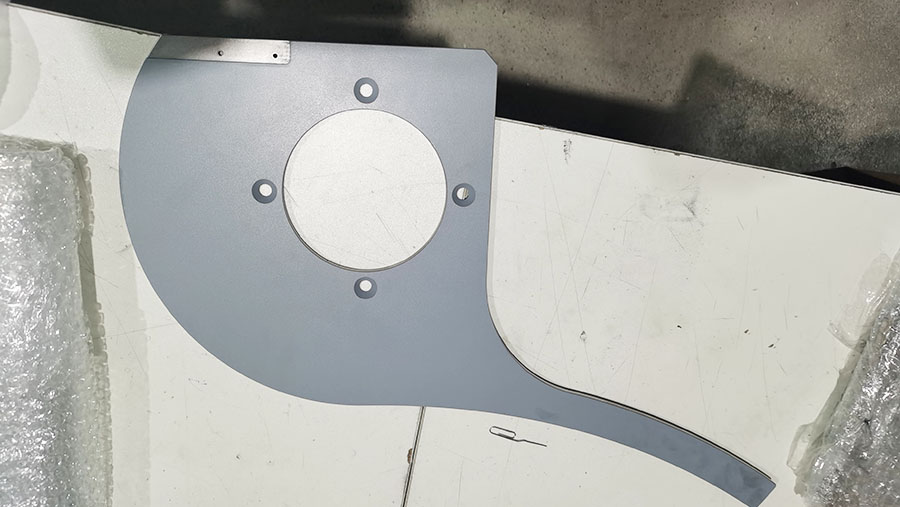
Choosing and Applying Teflon Coating
Not all coatings are created equal, and proper application is essential to maximize the benefits:
Surface Preparation: Before coating, the fixture surface must be properly cleaned and profiled to ensure strong adhesion. This typically involves degreasing and controlled roughening to allow the PTFE to mechanically interlock with the base metal.
Coating Thickness: The selected coating thickness should balance wear resistance with dimensional control. Too thick a layer can affect tight tolerance features; too thin may wear prematurely.
Application Method: Teflon coatings can be applied through spraying, dipping, or electrostatic processes. Automated or robotic coating systems deliver more consistent film thickness and coverage, which is important for fixture repeatability.
Manufacturers should work with experienced coating specialists and communicate component tolerances, load conditions, and expected environmental exposure to ensure an appropriate PTFE solution is selected.
When Teflon-Coated Fixtures Make the Most Sense
While Teflon coating provides clear benefits, its application is most justified in:
High-Volume Production Lines: Where fixtures are used continuously and part throughput demands long service life and minimal maintenance.
Automated Processes: Including robotic handling, automated loading/unloading, and CNC machining centers with integrated automation where fixture consistency directly impacts cycle time and quality.
Environments with Heavy Fluid or Chemical Use: Such as deep drilling, coolant flooding, or corrosive atmospheres where untreated surfaces would degrade quickly.
Precision Machining with Tight Tolerances: Especially where micro-movement resistance and stable friction behavior contribute to repeatable accuracy.
Conclusion
In automated machining environments, fixture workpieces face demanding conditions that test both mechanical design and surface performance. Applying a Teflon coating to automation fixtures addresses these challenges by combining corrosion resistance, extremely low friction, thermal stability, and ease of maintenance. Together, these characteristics improve fixture longevity, support smoother automated operations, and contribute to higher part quality and production efficiency.
Whether in a high-volume CNC line or a precision automated cell, integrating PTFE-coated fixtures into your machining strategy can deliver measurable benefits—from reduced downtime to consistent precision.