


In the world of metallurgy, strength is rarely an accident. While most people associate “hardening” with the dramatic quenching of high-carbon steel (turning red-hot metal into oil), there is another, subtler, yet equally powerful process used to strengthen some of the most critical alloys in engineering: Aging.
Aging is a critical phase in the heat-treatment cycle of many alloys, particularly aluminum, titanium, nickel-based alloys, and some steels. By carefully controlling temperature and time, aging strengthens the material through microstructural changes that enhance its mechanical performance. Understanding how aging works—and how to apply it correctly—is essential for engineers and manufacturers who rely on consistent, high-strength components in aerospace, automotive, mold making, and precision CNC machining industries.
This guide explores the science behind aging, the difference between natural and artificial processes, and why time and temperature are the machinist’s most valuable tools.
What Is Aging in Heat Treatment?
Technically known as Precipitation Hardening, aging is a heat treatment technique used to increase the yield strength and hardness of malleable materials, including aluminum, magnesium, titanium, nickel superalloys, and some stainless steels.
Aging is a thermal process used to increase the hardness, strength, and dimensional stability of alloys. After a material undergoes solution treatment and quenching, it becomes supersaturated with alloying elements. Aging allows these atoms to diffuse and form fine precipitates, which block dislocation motion and significantly strengthen the metal.
Types of Aging in Heat Treatment
Aging can occur naturally at room temperature or be accelerated artificially at elevated temperatures. Understanding the differences between natural aging (NA) and artificial aging (AA) helps engineers select the right process for performance, cost, and manufacturing goals.
There are two primary ways to induce this precipitation, dictating the final temper of the material.
Natural Aging (Room Temperature)
Some alloys will harden spontaneously at room temperature after quenching. The supersaturated elements slowly precipitate out over a period of days or weeks until the structure stabilizes.
Common Designation: T3 or T4 (e.g., 2024-T3 Aluminum).
Characteristics: The process is slow. While it increases strength, it typically retains more ductility than artificial aging. It is often used when the part needs to be formed or cold-worked after heat treatment but before it reaches full hardness.
Artificial Aging (Elevated Temperature)
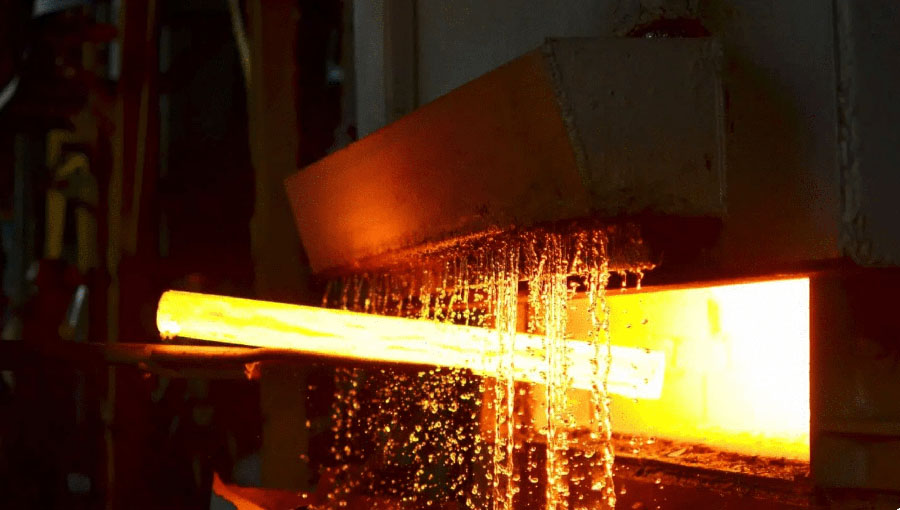
To achieve maximum strength, nature often needs a push. In artificial aging, the material is placed in a furnace at a relatively low temperature (typically between 100°C and 200°C for aluminum) for a specific number of hours. The heat accelerates the movement of atoms, causing the precipitates to form faster and in greater numbers.
Common Designation: T6 (e.g., 6061-T6 Aluminum).
Characteristics: This produces the highest tensile and yield strengths. The process is faster and highly controllable, allowing engineers to dial in exact mechanical properties.
Common Applications and Materials
Aging is critical in industries where high strength-to-weight ratios are paramount, such as aerospace, automotive, and high-performance machinery.
Aluminum 6061 & 7075: The most common machined aluminums. 6061 is almost exclusively machined in the T6 condition (artificially aged). 7075 is often used in T6 or T73 (over-aged to improve stress corrosion resistance).
Precipitation-Hardening (PH) Stainless Steels: Grades like 17-4 PH are unique. They machine well in the solution-annealed state (Condition A) and are then aged (e.g., H900 condition) to achieve hardness levels comparable to tool steels without the distortion risks of quenching.
Nickel Superalloys (Inconel): Used in jet engines, these alloys rely on aging (gamma-prime precipitation) to maintain their incredible strength at extreme temperatures.
Key Parameters That Influence Aging Results
Temperature
Higher temperatures accelerate diffusion but risk overaging.
Time
Insufficient time yields incomplete precipitation; excessive time reduces strength.
Cooling Rate
Post-aging cooling affects residual stresses and final dimensions.
Alloy Composition
Each alloy has a unique aging curve and requires tailored processing.
Manufacturers often rely on hardness tests and microstructure analysis to optimize aging schedules.
Conclusion
Aging is a sophisticated metallurgical dance. It transforms soft, pliable alloys into the high-performance materials that build our modern world. For the manufacturer and the engineer, understanding the distinction between natural and artificial aging—and the risks of over-aging—is essential. It ensures that the material on the shop floor doesn’t just look like the right alloy, but performs with the structural integrity promised by the design.